
Blog

All Service & Parts Jeep Gladiator Color Options Tips and Tricks Used Cars Jeep Wrangler Toyota Toyota Highlander Toyota Venza Local Ram 1500 Toyota 4Runner Toyota Prius Toyota RAV4 Toyota Tacoma Jeep Grand Cherokee Safety Toyota Camry Jeep Compass Toyota Sequoia Dodge Dodge Challenger Ram 2500 Toyota Corolla Toyota Corolla Cross Toyota Sienna Chrysler Electric Vehicles Finance Jeep Grand Cherokee L Parts & Accessories Toyota Avalon Toyota EV Toyota Supra Toyota Tundra Wagoneer Series II Dodge Hornet Hybrid Jeep Cherokee Jeep Grand Wagoneer Jeep Renegade Ram Ram 3500 Toyota C-HR Toyota GR86 Toyota Grand Highlander Wagoneer Series III 300 Dodge Charger Last Call News Ram 1500 TRX Toyota bZ4X Toyota Crown Toyota GR Corolla Toyota GR Corolla Morizo Edition Toyota Mirai Vehicle Comparisons
Assorted automotive parts and spark plugs for vehicle repair
in Parts & Accessories

OEM Parts vs Aftermarket Parts: Toyota and Mopar Parts Explained

A cracked bumper. A worn brake pad. A headlight that's finally given out. Whatever the repair, the same fork in the road shows up: go with the original part or try aftermarket instead. For drivers in Warrenton, Astoria, Seaside, and other Oregon Coast towns, that choice affects fit, warranty coverage, and how the vehicle performs down the road. This guide breaks down what separates OEM parts from aftermarket alternatives, so you can make a confident call the next time your Toyota, Jeep, Ram, or Dodge needs a repair. You can also order parts online or connect with our service department if you'd rather skip ahead. OEM vs. Aftermarket Parts: What Warrenton, OR Drivers Should Know OEM stands for original equipment manufacturer, meaning the part comes from the same company that built your vehicle. Aftermarket parts, by contrast, are made by outside companies that never touched your car on the assembly line. Both categories serve real purposes, and neither one is automatically the right answer for every repair. The decision often comes down to what part you're replacing, whether your vehicle is still under warranty, and how long you plan to keep the car. What Are OEM Parts and Why Fitment Matters OEM parts are built to the exact specs of the vehicle they're designed for, which matters more than most people realize until something doesn't line up right. A bumper that's off by a few millimeters, or a filter that seals slightly wrong, can cause bigger headaches later, from uneven wear on neighboring components to reduced efficiency. Because these parts are made to match the original engineering, they tend to install cleanly and perform the way the vehicle was designed to perform. OEM parts also typically come with a manufacturer warranty, giving owners a layer of protection that aftermarket options don't always match. How OEM Parts Are Engineered to Match Your Vehicle's Specs Every OEM part goes through a manufacturing process built around the original vehicle's blueprints, matching the same materials, dimensions, and performance thresholds as the factory version. Manufacturers test these parts to confirm they hold up under the same conditions the vehicle was designed to handle, which helps preserve the car's overall integrity over time. A part built to the same tolerances as the original is simply more likely to behave the way the rest of the vehicle expects it to. Toyota Genuine Parts and Mopar Genuine Parts Explained Toyota Genuine Parts are engineered to Toyota's own standards for quality, performance, and durability, covering brake pads, filters, wiper blades, and specialized components alike. Toyota builds these parts to hold up to its own internal standards for durability and performance, which is why so many owners specifically look for genuine Toyota parts when a repair comes up rather than settling for a generic substitute. Mopar plays the same role for CDJR vehicles. As the OEM provider for Chrysler, Jeep, Dodge, Ram, and FIAT, Mopar parts are designed by the same engineering teams responsible for the vehicles themselves. Mopar's lineup covers brake components, filters, spark plugs, and factory accessories, all built for a fit that matches the vehicle's original specs. What Are Aftermarket Parts and How They Differ An aftermarket part is simply one made by a company other than the original manufacturer. That's a broad category, covering everything from well-engineered replacement parts to budget options that cut corners somewhere along the way. Aftermarket parts are often designed to mimic OEM parts in form and function, but they may not always match the exact measurements of the original component, and that gap in consistency is what drivers need to understand before buying. Variety in Quality, Purpose, and Budget Across Brands Walk into any parts store and you'll find a wide range of aftermarket brands at different price points and quality tiers. Some aftermarket manufacturers specialize in performance upgrades, others focus on affordable replacements for high-turnover items like wiper blades or cabin filters. This range gives drivers flexibility, but it also means research matters. Not every aftermarket brand holds itself to the same standard, so knowing what you're buying is part of the process. Potential Benefits and Trade-Offs of Aftermarket Options Aftermarket parts can come with real advantages, including a wider selection and sometimes a lower upfront cost compared to going through the dealership. Some aftermarket manufacturers even offer performance-oriented parts that aren't available as OEM equipment at all. The trade-off is that quality and warranty coverage vary from one aftermarket brand to the next, and a part that doesn't fit quite right can end up costing more in the long run if it needs to be replaced again sooner than expected. Comparing OEM and Aftermarket: Quality, Warranty, and Long-Term Value Every repair decision comes down to balancing fit, protection, and how long you expect the part to perform. Below is a side-by-side comparison of how OEM and aftermarket parts generally stack up. Factor OEM Parts Aftermarket Parts Fit/Tolerance Matches original vehicle specs precisely Designed to be similar, but measurements can vary Materials/Certification Built to manufacturer standards Varies by brand, some carry CAPA certification Warranty Coverage Toyota: 12 months parts-only over the counter, or 12 months parts and labor when dealer-installed. Mopar: 24 months/unlimited miles, parts and labor when dealer-installed. Performance Parts differ by part number Varies widely by manufacturer, often limited or none Typical Use Case Safety systems, warranty-covered repairs, precise-fit components Cosmetic parts, routine maintenance items Installation Considerations Straightforward fit reduces installation issues May require adjustment depending on brand quality Fit, Performance, and Compatibility Fit is where the OEM versus aftermarket conversation gets the most practical. Because OEM parts are built to match the original vehicle, they generally install without surprises. Aftermarket parts can perform just as well in many cases, but compatibility isn't a given across every brand, which is why checking specifications before buying matters, especially for parts tied to safety systems. Toyota and Mopar Warranty Terms Warranty terms differ significantly by brand and part type, and it's worth understanding each on its own rather than assuming one beats the other. Toyota Genuine Parts bought over the counter carry a 12-month parts-only warranty from the purchase date, with labor not covered. Buy the same part and have a Toyota dealer install it, and the 12-month coverage includes both parts and labor. Toyota's Accessory Warranty runs 36 months or 36,000 miles when the accessory is purchased alongside a new vehicle, or 12 months if purchased afterward. Mopar's Basic Limited Warranty covers most parts for 24 months with unlimited miles: parts and labor when an authorized dealership installs them, parts exchange only if you buy over the counter and install them yourself. Buy the part and have an independent shop install it and you keep the 24-month parts coverage plus up to $150 toward labor. Remanufactured and new powertrain components carry a separate 3-year/100,000-mile warranty that transfers to a subsequent owner, which is unusual since most parts warranties end when the vehicle changes hands. Performance Parts vary by prefix: 770 parts get the standard 24 months, PW parts run 12 months or 12,000 miles, and parts beginning with P or 0 are sold as-is with no coverage at all. Aftermarket warranty terms are set entirely by the manufacturer. Some brands back their products generously; others offer barely anything. Normal wear and tear, cosmetic issues, and improper installation aren't covered regardless of which type of part you use. Your Rights Under the Magnuson-Moss Warranty Act The Magnuson-Moss Warranty Act, enforced by the FTC, prevents manufacturers from voiding your vehicle's warranty just because you used an aftermarket part. The manufacturer would have to prove that specific part actually caused the problem. The Act also protects your right to have routine maintenance, like oil changes, brake pads, and belts, done at any shop you choose. In other words, choosing an aftermarket part on a vehicle still under warranty is your call, not a rule violation. Just keep your receipts and service records in case a claim comes up later. Long-Term Ownership and Resale Value Precise fit and factory-backed reliability tend to matter more the longer you plan to keep a vehicle. OEM parts help preserve the mechanical consistency a car was built with, which can matter to future buyers or appraisers down the road. Reputable aftermarket brands can hold up well too, but quality swings more across that space, and outcomes are less predictable than with OEM components. Choosing the Right Parts for Your Vehicle and Budget The right choice depends on what you're replacing and what you're trying to protect, whether that's your budget, your warranty, or your peace of mind on long drives along the Oregon Coast. When Genuine OEM Parts Make the Most Sense Safety-related components, warranty-covered repairs, and parts requiring precise fitment are where OEM parts earn their reputation. Brakes, airbags, and sensors are worth paying for the confidence that comes with a part engineered to match the vehicle exactly. When Aftermarket Parts May Be a Reasonable Choice Cosmetic components and routine maintenance items are often reasonable candidates for aftermarket parts, especially when budget is a bigger concern than exact factory specs. Before buying aftermarket, it helps to run through a short checklist. Is this part covered by my vehicle's warranty right now. Is this a safety-related component like brakes, steering, or airbags. Does it carry CAPA certification for fit and performance. Will installation require special tools or dealership-level expertise. CAPA, the Certified Automotive Parts Association, has independently tested aftermarket collision parts like bumpers, fenders, and headlights since 1987, checking them against OEM standards for fit and function. CAPA sets benchmarks for the metals, plastics, lighting components, foam, and bumpers used in these parts, giving shoppers a way to gauge aftermarket quality beyond guesswork. How Lum's Auto Center Helps You Get the Right Parts Lum's Auto Center is a family-owned dealership group serving the Oregon Coast, including drivers in Astoria, Seaside, Ocean Park, and Tillamook. Our Warrenton service department works directly with Toyota, Chrysler, Dodge, Jeep, and Ram, along with many other makes. Whether you need a specific Toyota component or a Mopar part, our team is set up to help you find the right fit the first time. Requesting Toyota, Mopar, and Other Compatible Parts You can request parts online or stop by our location at 1605 SE Ensign Lane in Warrenton, OR. Fill out a short form and one of our parts specialists will reach out to confirm details and availability. You can browse Toyota and Mopar parts options online, and one of our team members can help if you're not sure exactly what you need. If your vehicle isn't a Toyota or a CDJR model, or if an OEM part is on backorder, our specialists can help you find a compatible alternative that fits your repair and your budget. Scheduling Service for Professional Installation Ordering the right part is only half the job. Proper installation matters just as much for safety and long-term performance. Our service center handles routine maintenance, inspections, and full repairs for Toyota, Chrysler, Dodge, Jeep, Ram, and other makes. Book an appointment online, or give our parts specialists a call directly at 503-861-1144 to talk through what your vehicle needs before you commit to a part.

Read More
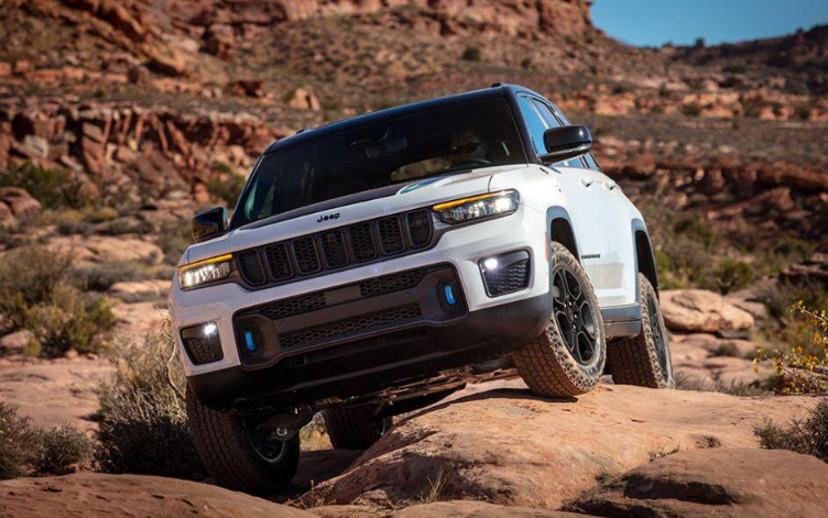
Jeep Grand Cherokee driving off-road over rocky desert trail

AWD vs 4WD for Oregon Coast Rain: Which Setup Do You Need?

Astoria averages 70.26 inches of rain a year, with November (11.05 inches) and December (10.68 inches) delivering the heaviest downpours while July stays dry at just 0.83 inches. Rain around here is the main event, not something happening in the background. If you're shopping for a vehicle to handle Highway 101 fog, wet gravel pullouts, or a boat ramp in Ocean Park, the AWD vs 4WD Oregon Coast question deserves a real answer. We put together this guide to help you sort through it, and if you want to see your options in person, you can always browse used AWD and 4WD vehicles at our Warrenton location. Why Oregon Coast Driving Demands the Right Drivetrain Between the near-constant drizzle, coastal fog rolling off the water, and the gravel spur roads connecting neighborhoods to the highway, this region asks more of a vehicle than most. For most daily driving, all-wheel drive makes a real difference in how confidently a car handles wet pavement. The right answer depends on where you actually drive, not where you might drive someday. AWD vs 4WD: How Each System Works AWD and 4WD both send power to all four wheels, but the mechanics and the driving experience differ enough that picking the wrong one for your lifestyle can mean paying for capability you'll never use, or not having the traction you actually need. All-Wheel Drive: Automatic Everyday Traction AWD uses a combination of front, rear, and center differentials to automatically send power to whichever wheels have the most grip, without any input from the driver. That convenience comes with some added weight and cost, along with a modest fuel economy impact. For Highway 101 commuters dealing with sudden rain squalls, that automatic response is what makes AWD reassuring. You don't have to think about it. It just adjusts. Four-Wheel Drive: Driver-Engaged, Heavy-Duty Traction 4WD takes a different approach, pairing two differentials with a transfer case, often including a driver-selectable high and low range. That extra hardware makes 4WD sturdier and better suited for rugged terrain, but it also means you're the one flipping a switch or lever to engage it. The advantages of 4-wheel drive really show up when you're crawling over rutted forest roads or need low-range gearing to pull through deep mud, not during a routine grocery run. Daily Rain Confidence in Warrenton, Astoria, and Seaside For the everyday stop-and-go of life in Warrenton, Astoria, and Seaside, AWD covers nearly every scenario you'll face. It works automatically in rain, sleet, or snow without requiring the driver to do anything special, essentially running in the background the whole time. If you're wondering whether you need AWD for a daily commute through coastal fog and wet intersections, the answer leans yes far more often than it leans toward 4WD. AWD helps maintain traction, but it won't eliminate the risks of wet or foggy driving. Slowing down, leaving extra following distance, and paying attention to reduced visibility on Highway 101 still matter, regardless of what's under the hood. Gravel Roads, Hills, and Light Trail Access Plenty of coastal side roads turn to loose gravel once you leave the highway. The gravel spurs and beach access roads around Warrenton and Fort Stevens State Park are a good example of the mixed surfaces you hit close to town. AWD handles moderate, well-maintained gravel surfaces like these without much trouble. For light trails and graded gravel, AWD works fine. For rougher routes with ruts, mud, or steep loose climbs, 4WD's low-range gearing gives you more margin, provided you're on a road or trail that's actually open to your vehicle. Beaches, dunes, and forest trails all have their own rules about what's allowed and when. If you're heading into Clatsop or Tillamook State Forest, keep in mind that most trails and dispersed sites stay open year-round, while developed campgrounds generally operate from mid-May through early October. Fire danger changes access: at High danger, OHV use is allowed only before 1 p.m. and after 8 p.m., and at Extreme danger, off-road vehicle use is restricted or prohibited. Forest roads are working roads shared with log trucks, and ODF recommends driving under 25 mph and staying right. Check ODF's road report and fire restrictions map before heading out rather than assuming a route is open. Towing, Hauling, and Truck Considerations 4WD earns its reputation when the load gets heavy. It often provides better towing and traction capability, though it costs more at the pump. If you're backing a boat trailer down a wet launch ramp in Ocean Park or Tillamook, that extra traction matters. Both AWD and 4WD can help pull boats up slippery wet ramps, a scenario a lot of coastal drivers deal with regularly. For heavier loads and slick ramps, 4WD is the safer bet. Matching Drivetrain to Your Lifestyle For daily driving, commuting, and light gravel, AWD usually gets the job done for most Oregon Coast households. Whether 4WD is worth it depends on how often you're towing, hauling, or heading onto rougher terrain. Common AWD and 4WD vehicles tend to stack up like this: Vehicle Drivetrain Typical Body Style General Fuel Economy Pattern Subaru Crosstrek AWD standard Crossover Better fuel economy pattern Honda Passport AWD Crossover SUV Better fuel economy pattern Hyundai Santa Cruz AWD available Crossover truck Better fuel economy pattern Ford F-150 4WD available Full-size truck Lower fuel economy pattern Toyota 4Runner 4WD available Body-on-frame SUV Lower fuel economy pattern Jeep Grand Cherokee 4WD available Unibody SUV Lower fuel economy pattern If you're mostly on paved Highway 101 with occasional rain, AWD covers you well. If you're taking occasional trips down gravel forest roads for hiking or fishing, AWD still handles most of that, with 4WD as a nice-to-have. If you're regularly towing a boat to a wet launch ramp or driving unmaintained backroads, 4WD starts to earn its keep. Want to compare options side by side? You can explore new AWD and 4WD models to see which lineup fits your routine. Family Driving and Fuel Economy Trade-Offs AWD often delivers better fuel economy than 4WD, which matters for families budgeting for gas over years of ownership. EPA-based estimates put the AWD penalty at roughly 1 to 2 mpg compared with a two-wheel-drive version of the same vehicle, and the gap can reach about 3 mpg on heavier 4WD trucks. For a family doing mostly school runs and grocery trips, that adds up over a year of driving. The drivetrain option itself also costs more upfront, typically a few hundred to a couple thousand dollars on a crossover and more on a full-size truck, so it's worth pricing the exact configurations you're comparing. SUVs vs Trucks: Which Drivetrain Fits Best Whether you need AWD or 4WD depends heavily on body style and use case. AWD tends to show up on cars and crossovers like the Subaru Crosstrek, Honda Passport, and Hyundai Santa Cruz, all of which prioritize ride comfort and efficiency. 4WD is more common on body-on-frame trucks and SUVs such as the Ford F-150 and Toyota 4Runner, with the unibody Jeep Grand Cherokee as a notable exception that still offers genuine 4WD capability. It comes down to whether daily comfort or off-pavement capability matters more to you. Beyond Drivetrain: Tires, Ground Clearance, and Owner's Manual Guidance Drivetrain is only part of the traction equation. Tire condition matters just as much, and so does ground clearance, the distance between the lowest point of your vehicle and the road. A crossover with six or seven inches of clearance handles a graded gravel road fine but can drag on deep ruts or a washed-out edge, which is where a truck or body-on-frame SUV with more clearance has the advantage. On steep, wet grades, both drivetrains help you climb, but getting back down safely comes down to brakes, tires, and speed rather than which wheels are driven. ODOT rules state that AWD and 4WD vehicles under 6,500 pounds unloaded, not towing, equipped with M+S, all-weather, or traction tires on all wheels, and still carrying chains in the vehicle, are generally exempt from having to use those chains in winter conditions. Vehicles rated 10,000 pounds GVW or less that aren't towing may use traction tires instead of chains in typical winter conditions, though in very bad conditions all vehicles may be required to chain up regardless of drivetrain or tires. Keeping tires in good shape, and scheduling regular maintenance checks, does as much for wet-weather traction as the drivetrain itself. Your owner's manual is the best source for how your specific system works: when it engages, whether it has a low range, which drive modes are available, and any towing or tire limits the manufacturer sets. Two vehicles both labeled AWD can behave quite differently, so it's worth reading that section before you rely on it in bad weather. Find Your Ideal AWD or 4WD Vehicle at Lum's Auto Center We've been a family-owned part of the Oregon and Southwest Washington community since 1969, serving drivers throughout Warrenton, Astoria, Seaside, Long Beach, and Tillamook. We've watched generations of coastal drivers deal with exactly these conditions, and there's no single right answer for everyone. Talk to Our Team Some households need the everyday reassurance of AWD. Others need the towing muscle and low-range gearing of 4WD. Our team can walk you through the differences in person and help you land on the setup that actually fits your routine. Stop by, give us a call at 503-861-1144, or browse used AWD and 4WD vehicles online before you visit. Frequently Asked Questions Is AWD necessary for Oregon Coast driving? For most daily driving on Highway 101 and around town, AWD provides meaningful traction benefits in rain and fog. Not every driver needs it, but it does help maintain control in the kind of wet conditions that are routine here. Do I need 4WD if I don't tow or go off-road often? If your driving stays mostly on pavement and light gravel, 4WD is more capability than you'll typically use. It becomes worthwhile once towing, hauling, or genuine backcountry driving enters the picture. Which is better, AWD or 4WD, for winter weather? AWD tends to work better for everyday winter driving because it engages automatically and doesn't require driver input. 4WD offers more raw capability but is generally better suited to rougher terrain than routine wet-weather commuting.

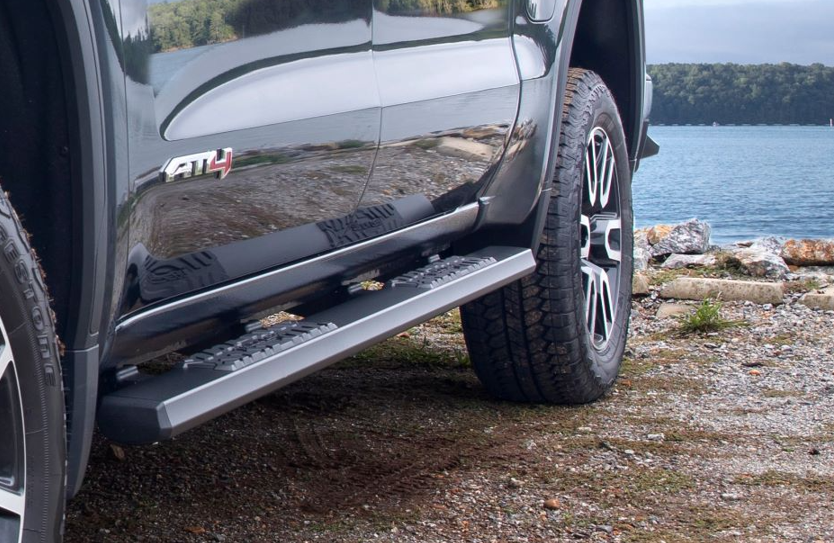
GMC truck side step running board near lakeside

What Are Running Boards on a Truck or SUV? Uses, Benefits and Fitment Tips

Climbing into a lifted truck or tall SUV isn't always graceful, especially with kids in tow or gear to load before sunrise. The right running board can make that step a lot easier. This guide covers what running boards are, how they compare to nerf bars and other step options, and what to check before buying. Feel free to explore running board options we carry at Lum's Auto Center. What Are Running Boards on a Truck or SUV? A running board is a flat platform mounted along the lower sides of the vehicle, just below the doors, giving passengers a wider, stable surface to step on when getting in or out. They're common on pickups, large SUVs, off-road builds, and family vehicles where ride height turns the door sill into a real stretch. Running boards shorten the step up on most trucks and SUVs, and depending on the design, they can also shield lower doors and rocker panels from splash and road debris on gravel roads or muddy trails. How Running Boards Are Built and Mounted Manufacturers build running boards from aluminum, steel, or heavy-duty molded plastic, and each material comes with its own tradeoffs. Aluminum is corrosion resistant and lighter, which is why it shows up so often on SUV applications. Steel is heavier and stronger but needs a quality protective finish to hold up over time. Plastic tends to be the budget option and works fine for lighter-duty use. Mounting usually relies on brackets that bolt into the vehicle's existing factory mounting points along the rocker panel or pinch weld, so most fixed boards go on without drilling. Installation time varies by vehicle and kit, often an hour or two for a straightforward bolt-on set. Powered boards take longer: AMP Research puts a typical PowerStep installation at three to five hours, since the boards wire into the door sensors, though plug-and-play kits that connect through the OBD-II port simplify that work. Why Shoppers Add Running Boards to Trucks and SUVs Running boards solve real, everyday problems that go well beyond looks. We hear from customers across the board on this one, parents buckling kids into car seats, contractors loading up before sunrise, and plenty of people in between who just got tired of hauling themselves up into the cab. Easier Access for Lifted Trucks and Tall SUVs Lifted trucks and tall SUVs look great, but that extra ground clearance makes climbing in tougher for shorter passengers. We've talked with plenty of customers whose kids need a wider stepping surface just to reach the cab comfortably. A running board turns a stretch and a scramble into a simple step up. Passenger Convenience and Family-Friendly Use Compared to a narrow nerf bar, a running board's wider platform gives a steadier place to plant a foot, which matters for children and elderly passengers who need a more forgiving margin for error. Families running carpools or weekend trips often find this one of the more practical upgrades they make to a vehicle. Better Footing in Wet Weather Along the Oregon Coast Drive around Warrenton, OR, Astoria, Seaside, Ocean Park, or Tillamook long enough, and you already know the ground rarely stays dry or clean for long. Running boards Warrenton OR drivers rely on typically feature textured pads, molded grooves, or grip-focused finishes designed to improve traction when the ground and your boots are both wet. No step surface is slip-proof, so it's still worth taking your time on a wet or icy morning. That texture matters more than people expect once you're stepping down onto a rain-slicked board in the dark. Everyday Use for Work Trucks Work truck owners tend to care less about flash and more about dependability. If you're loading tools at 5 AM before a job site, you want a step that's low maintenance and just works every time. Many work truck buyers lean toward a clean, understated look, favoring fixed running boards over powered options that add more things that could eventually need service. Running Boards vs. Nerf Bars: What's the Difference? The nerf bars vs running boards question comes up a lot, and it really comes down to shape, coverage, and purpose. Nerf bars are tubular, often 3, 4, or 5 inches in diameter, usually made of metal with a rubber or textured pad, and they run either cab length or wheel to wheel. Built with a more rugged look, they provide more side impact protection, which appeals to off-road minded owners. Running boards take a flat, platform style approach instead, typically 4 to 7 inches wide, with some stretching up to 10 inches. They sit tucked close to the body for a cleaner, more finished appearance and offer a wider continuous stepping surface, better suited to frequent passenger access. Feature Running Boards Nerf Bars Coverage Continuous flat platform Tubular bar, cab length or wheel to wheel Style Sleek, close to body Rugged, more exposed Best Use Case Frequent passenger access, families Off road protection, side impact Material/Mounting Type Aluminum, steel, or molded plastic; bolt-on brackets Steel tube with rubber/textured pad; bolt-on brackets Neither option wins outright. It comes down to whether you're prioritizing a wide, family friendly step or a rugged bar that doubles as side protection. Other Side-Step Options: Drop Steps, Power Running Boards, Hitch Steps, and Rock Sliders Traditional running boards aren't the only way to make truck side steps easier to use. A few alternatives solve specific problems that flat boards don't always address. Drop Steps Drop steps essentially add a second level to a running board setup. The main bar sits close to the body for style, while a lower step extends down for easier entry on lifted trucks. You gain easier access, but you trade off a bit of ground clearance and stepping area compared to a single wide board. Electric Power Running Boards Power running boards deploy automatically when you open the door and retract when you close it, keeping the vehicle's profile clean and preserving ground clearance off-road. AMP Research's PowerStep shows what the category offers: 600 lbs of support per side, roughly 10 to 12 inches of extension in about a second, anti-pinch technology that re-lowers the board if it meets resistance, weatherproof motors tested to -40°F, and LED courtesy lights. The PowerStep XL steps down about 3 inches lower for lifted rigs. Kits come matched to your specific make, model, and year. Ratings vary by product, and some listings rate one board while others rate the full system. Read the fine print before assuming a number applies to your setup. Hitch-Mounted Steps Hitch-mounted steps attach directly to your trailer hitch and give you a step up to the truck bed, cargo, or a roof rack, while also helping protect your rear bumper from scuffs. They fit standard 1¼ inch, 2 inch, and 2½ inch receivers, usually come with treaded pads for grip, and some models even include an integrated third brake light. They're a solid option if you need occasional bed access without adding permanent side steps. Rock Sliders Rock sliders are the heavy-duty side steps for trucks that off-road enthusiasts lean on. Structural by design, they mount to the frame or body and are typically built from steel or aluminum to protect the rocker panels during rock crawling or trail driving. They double as a step and, in some cases, as a jack or recovery point, though specific protection capability varies by product. Check the specs on the exact model you're considering rather than assuming one rating applies across the board. Appearance and Style Considerations Style matters almost as much as function for a lot of buyers. A wider board tends to feel more stable underfoot and gives off a sturdier look, while a narrower bar often reads as cleaner and sportier. Finish options include chrome, stainless steel, black powder coat, and paintable surfaces that can be matched to your vehicle's color. There's no single correct answer here since so much of it comes down to what look you're going for and how you use the truck day to day. Fitment Basics: What to Check Before You Buy Before you buy, it helps to know that running boards being universal is mostly a myth. Fit varies by vehicle, and getting it right matters for both function and appearance. Matching Boards to Your Vehicle's Make, Model, and Trim Running boards are generally engineered around a specific make, model, year, and sometimes trim level. A universal kit might technically bolt on, but it risks misalignment, uneven gaps, or premature wear, especially with power deploying boards that rely on precise sensor placement. Checking compatibility against your exact vehicle before ordering saves headaches later. Mounting Points, Load Rating, and Installation Notes Confirm whether the board uses your vehicle's factory mounting points, and pay attention to whether a load rating applies to a single board or the whole system, since that distinction affects how you should think about weight capacity. If you're adding a power running board with wiring and sensors, plan for a more involved installation than a simple bolt-on kit. If you're not sure which combination of features, materials, and mounting hardware fits your truck or SUV, our team can walk through the options with you and connect you to Lum's accessories suited to your vehicle. Get Help Choosing Running Boards at Lum's Auto Center OEM vs. Aftermarket and Brand Availability If you're still weighing side steps vs running boards, or wondering who installs running boards on trucks in your area, our service team at Lum's Auto Center can help you sort through the options for your specific make and model. We carry accessories for Toyota, Chrysler, Dodge, Jeep, and Ram vehicles, including Mopar parts, and can walk you through the tradeoffs between OEM and aftermarket choices so you know exactly what you're getting. Ready to Move Forward? Whether you're searching for running boards installed near me or just want to confirm fitment before you buy, reach out to our team or stop by our Warrenton location. You can also browse Lum's running boards online or contact us directly to schedule a consultation before making a purchase, especially if you want to avoid fitment surprises down the road. Frequently Asked Questions About Running Boards Do running boards fit all trucks and SUVs? No. Most are engineered for a specific make, model, year, and sometimes trim, and they mount to factory points that differ between vehicles. Even within one model line, a crew cab and an extended cab need different lengths. Always confirm fitment against your exact vehicle before ordering. Can I install running boards myself? Fixed bolt-on boards are within reach for most people with basic tools, often taking an hour or two when the vehicle has factory mounting points. Powered boards are a bigger job. AMP Research puts a typical PowerStep install at three to five hours because the boards wire into the door sensors. How much weight can running boards hold? It depends on the product. AMP Research rates its PowerStep and PowerStep XL at 600 lbs per side. Many fixed boards and nerf bars are rated lower, and some listings don't publish a rating at all. Check whether the number applies to one board or the full system. Do running boards hurt ground clearance or off-road ability? Fixed boards and drop steps sit below the rocker panel, so they reduce clearance and can catch on obstacles. Power running boards retract above the frame rails when the doors close, and rock sliders are built to take contact with rocks and terrain.

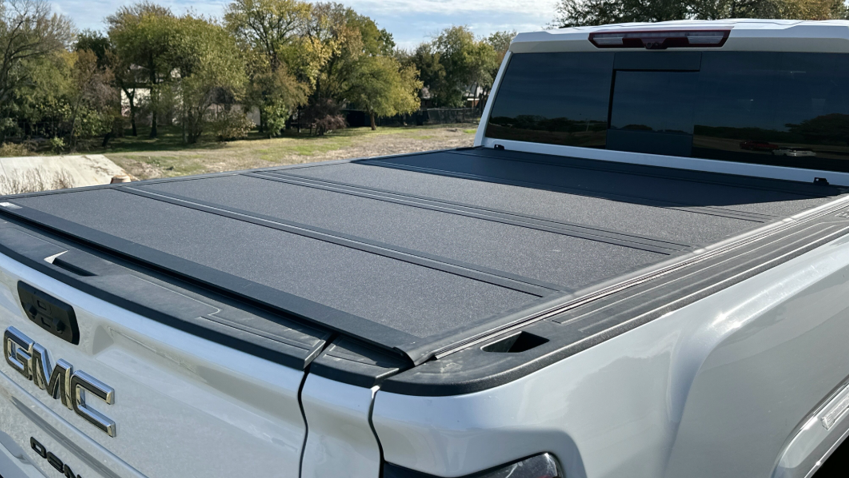
GMC pickup truck bed with hard tonneau cover

Types of Truck Bed Covers: Soft, Hard, Folding and Roll-Up Options Explained

Picking the right bed cover isn't just about looks. It changes how your cargo stays loaded and dry, and how much protection you get against theft. If you're comparing types of truck bed covers for a truck you already own, or you're still shopping for the right truck, this guide breaks down how each style works and which one fits your daily routine. Why Truck Bed Covers Matter for Oregon Coast Drivers Around Warrenton, OR, rainfall isn't a seasonal inconvenience, it's a year-round reality. The Astoria/Warrenton area sees a normal annual rainfall of 70.26 inches, with November alone averaging 11.05 inches (NWS). A bed cover keeps your cargo dry through that, cuts down on UV fading for your bed liner, and keeps tools or gear tucked out of sight when you're parked at a trailhead or job site. Soft Tonneau Covers: Roll-Up and Folding Styles Soft bed covers are built from vinyl or canvas material stretched over a frame. They're the lightest, most affordable category, and most owners can install one without drilling into the bed. How Roll-Up Covers Work and Who They Suit A roll-up soft cover uses vinyl or canvas stretched over a bow frame. You unsnap it and roll it toward the cab, opening the entire bed in seconds. Installation typically takes under 30 minutes with no drilling required. This style suits drivers who need frequent full-bed access, like weekend haulers moving mulch or furniture. How Folding (Tri-Fold) Covers Work and Who They Suit Tri-fold covers use marine-grade vinyl stretched over a rigid aluminum frame, split into three hinged panels. You fold the rearmost panel toward the middle, then toward the cab, giving you a choice between partial or full bed access. This works well for drivers who split time between work errands and weekend trips, since you can leave part of the bed covered while loading taller items in front. Soft Cover Pros, Cons, and Weather Considerations Soft covers keep out light rain but aren't sealed tight, so standing water or a heavy downpour can find its way in around the edges. Security-wise, they offer essentially zero theft deterrence; a pocket knife can slice through the vinyl in seconds. Their advantage is weight: soft covers come off easily when you need the whole bed open, and installation rarely takes more than an hour. Hard Tonneau Covers: Roll-Up, Folding, and One-Piece Styles Hard covers come in three main configurations: hard roll-up, hard folding, and one-piece hinged. All three trade some of the soft cover's flexibility for meaningfully better security and weather sealing. Hard Roll-Up and Hard Folding Covers Hard roll-up covers use interlocking aluminum, polycarbonate, or composite slats, which add real reinforcement compared to a soft shell alone. Hard folding covers mount rigid panels on an aluminum frame, using a hidden or quick-release latch that auto-locks each panel. Many models include weather sealing features such as perimeter bulb seals and internal drain tubes that channel water out behind the wheel wells. Some hard roll-up and folding covers can be driven with the cover open, partially open, or fully closed, offering more flexibility than a one-piece design. One-Piece Hinged Hard Covers A one-piece hard cover lifts from the tailgate end like a hood, using a single solid panel. It's the most rigid and secure configuration, which is why work trucks and fleet vehicles commonly pair it with a spray-on bedliner. The tradeoff is flexibility: cargo taller than the closed cover simply won't fit, so this style suits drivers hauling consistent, lower-profile loads. Hard Cover Pros, Cons, and Security Benefits Hard covers overall provide strong locking mechanisms and good weather sealing. Per LINE-X's own comparison guide, hard folding, retractable, one-piece, and topper-style covers rank among the best options for security. Brand-specific weight ratings back up that durability angle: BAKFlip lists its BAKFlip G2 at 300 lbs of evenly distributed support and the BAKFlip MX4 at 400 lbs. The downside is weight and bulk, which can make removal a two-person job compared with a soft cover. Retractable and Snap-On Cover Options Not every driver wants a fixed roll-up or hinged panel. Retractable and snap-on styles fill the gap between full security and everyday convenience. Retractable Covers for Flexible Access Retractable covers use interlocking aluminum or polycarbonate slats that retract into a canister mounted at the front of the bed, operated with a simple handle pull. What you end up with is a flush, locked appearance with full bed access whenever it's open. Retrax backs its RetraxPRO MX and XR models with its Legendary Lifetime Warranty, while RetraxONE models carry a limited lifetime warranty with replacement costs prorated after the first year. Its aluminum-slat covers support up to 500 lbs of evenly distributed weight and are tested from -40°F to 180°F and up to 95 percent humidity. Installation runs about 2 to 3 hours, longer for electric-powered versions that need power routing. If you're unsure about fitment or wiring, our service team can walk through installation details before you buy. Snap-On and Low-Profile Vinyl Covers for Budget Buyers Snap-on vinyl covers mount on a frame clamped to the bed rails and secure with snaps, with individual sections that unsnap for quick access. Per LINE-X's comparison, this style stays visible above the bed rails rather than sitting flush, so it won't have the low-profile look of retractable or hard one-piece designs. It's a reasonable entry point if a simple, budget-friendly setup matters more than a polished finish. Soft vs Hard Tonneau Cover: Side-by-Side Comparison Here's a quick comparison to help narrow down which type of cover is best for your situation. Cover Style Best For Relative Cost Bed Access Weather Sealing Look Soft roll-up Frequent full-bed loading $ Full, rolls to cab Water-resistant Sits above bed rails Soft tri-fold Mixed work and weekend use $ Partial or full Water-resistant Low, slight rail profile Snap-on vinyl Budget basic coverage $ Section by section Water-resistant Sits above bed rails Hard roll-up Security with full access $$ Full, rolls to cab Good, often with seals and drains Low profile Hard folding All-around daily driver pick $$ Partial or full Good, often with seals and drains Flush, low profile Retractable Flexible access, premium finish $$$ Any position, locks open Good, sealed canister and drains Flush, cleanest look One-piece hinged Work trucks, consistent low loads $$$ Full, but limits cargo height Best sealing Flush, matches paint Matching a Cover to How You Actually Use Your Truck Which cover is best really depends on how you use your truck week to week, not just which one looks best in the driveway. Matching Cover Type to Bed Access Needs If you're constantly loading bulky items, a roll-up or folding cover keeps that flexibility intact. If security matters more than access, a hard folding or one-piece design makes more sense. Weather Protection and Cargo Security on the Oregon Coast Given the rainfall totals mentioned earlier, hard one-piece and retractable covers come closest to sealing out water, though no cover on the market is truly waterproof. For drivers navigating gravel or rural roads in Clatsop County or Pacific County, that sealing difference matters more over time, especially if you're storing gear between trips rather than unloading daily. How you use the bed matters just as much. If your truck works during the week, think about what else lives back there: a crossbed toolbox, ladder rack, or bed rails all affect which covers fit, and some styles won't clear a toolbox at all. If your weekends involve crab rings, waders, camping gear, or kayak paddles, a locking cover means you can leave gear in the bed at a trailhead or boat ramp instead of hauling it into the cab. Tall or awkward loads, like a cooler stack or a rolled tent, favor a folding or retractable cover you can open partway, while a one-piece cover caps how tall your cargo can be. Looks and Getting It Installed Appearance splits the categories fairly cleanly. Soft roll-up and snap-on covers sit above the bed rails, so the cover reads as an add-on. Hard folding, retractable, and one-piece covers mount flush or near-flush for a factory look, and one-piece covers can often be color-matched to your truck's paint. Soft covers remain the quicker path to basic protection, while hard and retractable covers ask for a bigger investment in exchange for security and a cleaner look. Fitment is vehicle-specific by year, make, model, and bed length, so covers aren't universal across every model year, even within the same brand. Always confirm fitment before buying. Frequently Asked Questions About Truck Bed Covers Are Tonneau Covers Waterproof? No cover on the market is fully waterproof. All tonneau covers are water-resistant to varying degrees, and hard one-piece and retractable styles come closest to sealing out water completely. Do Tonneau Covers Affect Fuel Economy? Results vary by cover type, speed, and load, so there's no universal mpg gain to expect. A SEMA wind-tunnel study tested 13 covers and found about a 5 percent drag reduction, which translated to an estimated 2 percent fuel economy improvement at an average 48 mph. Consumer Reports found the opposite in a road test: a V8 Ram returned 22.3 mpg at highway speed with the tailgate up and no cover, dropping to 21.4 mpg with a soft tonneau installed, about a 4 percent loss. Treat any fuel economy claim as a secondary benefit, not a guarantee. Can I Install a Tonneau Cover Myself? Soft roll-up and tri-fold covers are generally the easiest to install, often installable in 20 to 45 minutes without drilling. Hard folding covers take closer to 1 to 2 hours, and retractable covers, especially electric versions, can run 2 to 3 hours with additional wiring work. If you'd rather have it done right the first time, you can schedule a service appointment with our team. Find the Right Tonneau Cover at Lum's Auto Center Talk to Our Team We sell and install Toyota, Mopar, and aftermarket tonneau covers across our Oregon and Washington locations, so whether you're weighing a soft roll-up for weekend trips or a hard one-piece for job-site security, our team can talk through what fits your truck. If you're still deciding what type of cover is best for your specific model, explore tonneau cover options at Lum's Auto Center or browse our full accessories lineup for other upgrades worth pairing with a new cover. Fitment questions, hauling gear up the coast, wondering how a cover holds up under Oregon Coast rain? Contact our team at any of our Oregon and Washington locations and we'll help you match the right cover to your truck.

Technician connecting jumper cables during vehicle battery service

Battery Service and Replacement in Warrenton: Oregon Coast Weather Checklist

If your car has ever struggled to start on a foggy Warrenton morning, you already know the Oregon Coast is tough on batteries. Salt air, damp mornings, and short errands around town chip away at battery life faster than what drivers inland typically deal with. At Lum's Auto Center, we see the pattern every week, and we want you to understand what's happening under your hood before you're stuck in a parking lot turning the key and getting nothing back. If you're already noticing warning signs, schedule battery service online and we'll get you a proper diagnostic instead of a guess. Why Oregon Coast Weather Puts Extra Strain on Your Battery Coastal living has plenty of perks, but your car battery doesn't share in the enthusiasm. Salty moisture and cool temperatures wear batteries down well before the mileage on your odometer would suggest, and stop-and-go local driving doesn't help matters. Salt Air and Terminal Corrosion Salt particles hang in the air here constantly, and they settle on battery terminals and connections, speeding up corrosion. Once corrosion sets in, power delivery suffers because the connection between the terminal and cable weakens. Humid conditions make it worse. If you spot white or greenish buildup around your terminals, that's corrosion, and it often lines up with starting trouble. Salt and humidity don't stop at the main terminals either. They get into ground straps and low-voltage connectors too, which can trigger warning lights, sensor errors, or a no-start condition that seems to come out of nowhere. Cold, Damp Mornings and Reduced Cranking Power Cold mornings hit batteries harder than most drivers realize. A battery loses around 35% of its strength at 32°F, and roughly 60% at 0°F, according to AAA. Cold slows the chemical reactions inside the battery, so a vehicle's engine can demand about 50% more energy to crank at freezing temperatures. On top of that, cold thickens engine oil, making the engine harder to turn over in the first place. Add in morning dew and condensation, and you've got moisture collecting right around your terminals, which compounds the corrosion problem already mentioned. Short Trips and Moisture-Related Wear Plenty of Warrenton driving happens in short bursts, whether it's a quick trip to the store or a school pickup. These short hops don't give the alternator enough time to fully recharge the battery. Over time, that gradual charge loss leads to sulfation, where lead sulfate crystals build up on the battery plates and hurt performance. It's a slow, quiet failure that often goes unnoticed until the battery simply won't hold a charge anymore. Warning Signs You Need Battery Service in Warrenton Most battery failures don't happen without warning. The trick is knowing what to look for before you're stranded. Slow Starts and Car Won't Start Symptoms A slow engine crank is usually the first clue. You might also notice headlights dimming at idle, power windows moving sluggishly, the radio cutting out, or dash lights flickering intermittently. If you've needed a jump-start more than once recently, that's a strong signal the battery isn't holding its charge the way it should. Dashboard Battery Warnings and Electrical Issues A dashboard battery light doesn't automatically mean you need a new battery. It points to a charging or electrical system issue, and a loose terminal or a failing alternator can trigger it just as easily as a dying battery. Generally speaking, batteries cause slow cranking, dim lights, and repeat jump-start situations, while alternator problems tend to cause the car to die while driving or trigger that dash light mid-trip. Sorting out which one you're dealing with really requires testing rather than guesswork. Corrosion, Swelling, or Battery Age Concerns White or green buildup on the terminals can cause hard starts, flickering electronics, and charging problems, and it often points to an aging or overcharging battery. A swollen or bloated battery case is a more urgent red flag. It usually means overheating or overcharging, and it carries the risk of leaking acid or rupturing outright, so immediate replacement is the right call. Age matters too. Most batteries last three to five years, though vehicles loaded with electronics tend to skew closer to the three-year mark. Once your battery passes that three-year point, it's worth having it tested. Why Testing Comes Before Replacement A weak-looking battery doesn't always need replacing, and drivers who skip testing often end up paying for a battery they didn't actually need. What a Battery Health Check Involves A proper battery health check starts with a voltage check, but that's only half the picture. A load test, using a carbon pile load tester, varies the current draw on the battery to see how it actually performs under stress. Electronic conductance testing goes further, measuring CCA and giving us the most accurate modern read on battery health. We also test alternator output under load, inspect the drive belt and charging wiring, and check for excessive key-off current drain, which should stay under 50 milliamps. If you've recently had an alternator replaced, we'll check the battery's condition as part of that process too, since the two systems work hand in hand. Charge, Replace, or Good to Go: Understanding Your Results Once testing is complete, the results usually land in one of three places. The battery might just need a full charge, it might need replacing outright, or it might be perfectly fine while something else in the charging system is the actual culprit. Sulfation can sometimes prevent a battery from taking a full charge even after service, which is another reason a professional test matters more than a jump-start and a hope. Schedule an appointment and we'll walk you through the results in plain language. Coastal Battery Maintenance Tips for Warrenton Drivers A little routine care goes a long way toward keeping your battery healthy in a salt-air environment. Preventing Corrosion in Salt Air Conditions Clean terminals periodically with a mix of baking soda and water and a gentle wire brush, then rinse and dry thoroughly. Apply dielectric grease to the terminals after cleaning to help block moisture and slow future corrosion. Inspect terminals visually every few weeks, especially after rainy stretches. Salt-induced corrosion on grounds and sensor connectors causes intermittent electrical gremlins that are genuinely hard to diagnose without proper testing. Seasonal Habits That Extend Battery Life Take your vehicle on a highway drive of at least 15 to 20 minutes once a week to give the battery a real chance to recharge fully. Turn off accessories, lights, and climate controls before shutting off the engine to avoid overnight parasitic drain. Have your battery tested once it passes the three-year mark, even if it seems to be starting fine. Age-related decline often shows up in testing before it shows up in daily driving. Battery Service for Toyota and Other Popular Models Different makes have different electrical demands, and battery service should reflect that. If your Toyota is showing a weak battery, hard starts or dim headlights when the engine's off are common tells, and we test it thoroughly before recommending anything. When replacement is genuinely needed, we typically recommend a Toyota TrueStart™ battery, built to Toyota's own standards with the correct CCA and RC for reliable performance in any climate, including ours. You can learn more about our Toyota battery service and replacement process and what to expect. Beyond Toyota, our technicians also service Chrysler, Dodge, Jeep, Ram, and GMC vehicles, and we handle proper disposal of the old battery so you don't have to think about it. Schedule Battery Inspection and Service at Lum's Auto Center Serving Warrenton and the Oregon Coast Whether you're driving in from Astoria, Seaside, or Ocean Park, our Warrenton service center is set up to make battery service straightforward. We regularly run a complimentary battery health check special, so ask us about current offers when you call or stop by since it's a great way to catch a weakening battery before it strands you. You'll find us at 1605 SE Ensign Lane, Warrenton, OR, open Mon–Fri 8 AM–5 PM and Sat 8 AM–4 PM. Battery Types We Work With Battery type, corrosion resistance, and best use case are the main differences worth understanding when comparing options. Standard flooded batteries offer moderate corrosion resistance and suit everyday coastal commuting. AGM batteries offer higher corrosion resistance and fit vehicles with heavy electronic loads better. Toyota TrueStart™ batteries are engineered for varied climates and matched to Toyota specs, making them the right choice for Toyota models needing an OEM-matched fit. All three types generally carry a typical lifespan of three to five years, with CCA and reserve capacity varying by vehicle application. Book Your Visit For battery service Warrenton OR drivers can count on, schedule your battery inspection online or reach out to our team with any questions before you come in. Battery Service FAQs How long do car batteries typically last? Most last three to five years, though extreme temperatures, frequent short trips, and heavy electronics use can shorten that, with electronics-heavy vehicles often skewing closer to the three-year mark. Does cold weather permanently affect a battery's capacity? It can. Cold thickens the electrolyte and increases internal resistance, and repeated exposure without proper charging can permanently reduce capacity over time. Does a dashboard battery light always mean I need a new battery? No. It signals a broader charging system issue, which could involve the alternator or a loose terminal rather than the battery itself. Is a small amount of terminal corrosion a big deal? Light corrosion can be cleaned, but any buildup around the posts should be inspected soon to avoid starting or charging problems down the road. If a jump-start gets my car running, is the battery actually fine? Not always. A jump-start gets you moving, but it doesn't tell you what's actually wrong, and a weak battery may not hold that charge, leaving you stranded again shortly after.

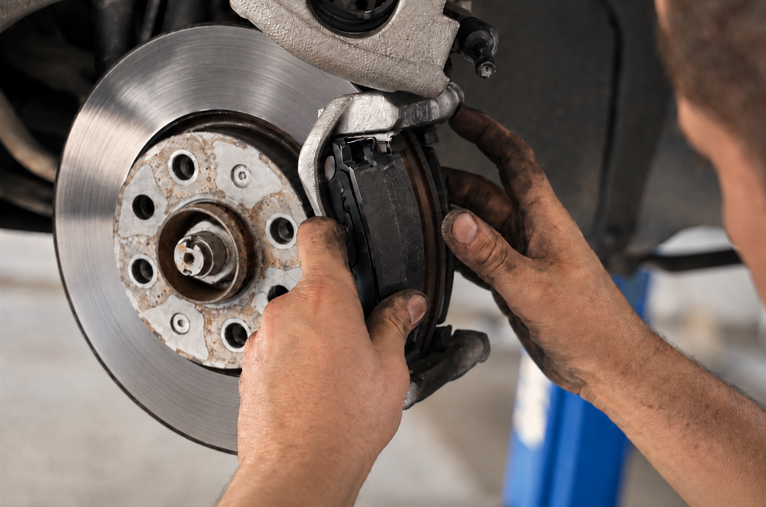
Technician installing brake pad during vehicle brake service

Brake Service Near Astoria and Warrenton: Signs Your Vehicle Needs Inspection

Noise, softness, pulling to one side. If your brakes are doing any of that, pay attention. Drivers around Astoria and Warrenton deal with faster brake wear than most people in drier, flatter parts of the country, and putting off a fix here can turn something minor into a real safety problem. We've kept Oregon Coast drivers safely on the road since 1969, and we want you to know exactly what to watch for and when to call. If you're noticing any of the signs below, schedule a brake inspection with us before your next trip up Highway 101. Why Astoria and Warrenton Drivers Face Extra Brake Wear Brakes here work harder than they do almost anywhere else in the state. Astoria's terrain climbs fast from the bay, with Coxcomb Hill sitting nearly 600 feet above the water, and every steep descent means your brakes absorb more heat than they would on flat ground. Add near-constant moisture, tourist season traffic crawling through town, and salt spray off the water, and pads, rotors, and fluid all wear out faster than they should. Drivers searching for brake service near Astoria OR are usually dealing with these exact conditions, and catching the warning signs early keeps a small fix from becoming a big one. 7 Warning Signs Your Brakes Need Professional Attention Brakes usually give you a heads-up before they fail outright. Learn to catch these signals and you can get ahead of a problem instead of reacting to it on the road. Grinding or Metal-on-Metal Noise A grinding or scraping sound usually means the pads have worn all the way down, and metal is now grinding directly against the rotor. Get this looked at right away. Driving on metal-to-metal contact chews through rotors fast and cuts down your stopping ability with every mile you drive. Squealing or High-Pitched Squeaking That squeal often comes from the built-in wear indicator tab, a small piece designed to warn you before your pads get dangerously thin. Sometimes it's just glazing or moisture on the rotors, but either way, it's worth having a technician take a look. Soft, Spongy, or Sinking Brake Pedal If the pedal feels soft, sinks toward the floor, or needs more pressure than usual, you might have air in the lines, a fluid leak, or worn pads. Brake fluid also absorbs moisture over time, which contributes to that spongy feeling and can hurt stopping performance. Vibration or Pulsing When Braking A pulsing sensation through the pedal or steering wheel typically points to warped rotors. A professional inspection is the only reliable way to tell whether resurfacing will fix it or the rotors need full replacement. Vehicle Pulling to One Side If your car drifts left or right when you brake, uneven pad wear or a dragging caliper is likely the cause. This affects control, especially in wet conditions common around Clatsop County. Longer Stopping Distances Needing more room to stop than you used to means components are wearing down. On wet roads, stopping distances increase substantially, so worn brakes make an already risky situation worse. Dashboard Brake Warning Light That light on your dash doesn't turn on for no reason. Pair it with a different pedal feel or a pull to one side, and it's time to get things checked out. Risks of Ignoring Brake Warning Signs Brake problems left unattended tend to compound. A dragging caliper wears down a rotor. A rotor left too long chews through a fresh set of pads. Reduced stopping power and brake fade on long descents are common outcomes of ignoring early warning signs, and what starts as a simple pad replacement can turn into a rotor replacement or caliper repair if left unaddressed. On the Oregon Coast's hills and wet roads, that delay carries real safety risk, not just a bigger repair bill down the line. How Coastal Weather and Local Driving Conditions Affect Brake Life Those warning signs trace back to conditions unique to living on the Oregon Coast. Astoria sees an average of 81 inches of rain a year, with November alone bringing around 14 inches over 24 rainy days, and humidity that sits between 81% and 84% year-round. That moisture speeds up corrosion on rotors, calipers, and hardware, and it affects brake fluid too. Brake fluid is hygroscopic, meaning it absorbs moisture over time. That lowers its boiling point and can lead to internal corrosion, which explains that spongy pedal feel and longer stopping distances we mentioned earlier. Then there's the terrain. Hilly, downhill driving, like what you get near Coxcomb Hill, puts more heat into your braking system than flat-road driving does, and pads and rotors pay the price faster. Stop-and-go traffic, especially during tourist season when Highway 101 fills up, doesn't give brakes time to cool between stops, and that heat cycling adds up over time. Put all of this together and it's clear why brake repair Oregon Coast drivers need looks a little different than brake maintenance in drier inland regions. NHTSA data shows that roughly 12% of crashes are weather-related, and rain or wet pavement accounts for over 77% of those weather-related crashes, representing 74% of weather-related fatalities, largely because wet roads reduce tire traction and increase stopping distance. In a place as wet as Astoria, that statistic hits close to home. Simple Habits That Extend Brake Life A few small changes in how you drive can meaningfully slow down brake wear, especially given our local terrain and weather. Coast to stops when you can instead of braking hard at the last second, which reduces heat buildup and pad wear. Avoid riding the brake on long downhill grades near Coxcomb Hill; downshift or ease off the accelerator earlier instead. Rinse salt spray and road grime off your wheels after coastal drives to slow corrosion on calipers and rotors. How Often You Should Get a Brake Inspection Most brake inspections are recommended once a year or every 12,000 miles, whichever comes first. That guideline assumes average driving conditions, not the hills and moisture we deal with in Clatsop County. If you're doing frequent stop-and-go driving or regular hill descents, aim closer to every 6 months or 6,000 miles, sometimes stretching to 6-8 months depending on how you drive. If you notice any unusual sounds, vibrations, or warning lights before your next scheduled check, don't wait. Get it looked at right away. Brake Service Types Compared Not every brake issue calls for the same fix. Here's a quick breakdown of common services and when they typically come into play. Service Symptom Addressed Typical Trigger Urgency Level Approximate Service Time Pad Replacement Squealing, grinding Pads worn to minimum thickness or wear indicator activated High if grinding, moderate if squealing Under an hour Rotor Resurfacing Vibration or pulsing Warped or unevenly worn rotor surface Moderate About an hour Caliper Repair Pulling to one side Dragging or sticking caliper Moderate to high One to two hours Brake Fluid Flush Spongy pedal, longer stopping distance Moisture-contaminated or aged fluid Moderate Under an hour What to Expect During a Professional Brake Inspection at Lum's Auto Center When you bring your vehicle to our Warrenton service department, our factory-trained technicians check pad thickness, measure the rotors, inspect calipers for dragging or leaks, and test the condition of your brake fluid. We service Toyota, Chrysler, Dodge, Jeep, Ram, and many other makes, using genuine parts throughout. If you drive a Toyota, our Toyota brake service is part of the Toyota Express Maintenance program, a multi-point inspection that specifically verifies your pad thickness is at a safe level. We also offer a complimentary brake inspection, where our technicians look over your pads, rotors, and overall braking system at no cost. If we find something that needs attention, we'll walk you through your options before any additional work begins. This offer can't be combined with other promotions, so ask us for current details when you call. Once you know where your brakes stand, you're in a much better position to plan ahead rather than react to a problem on the road. If something doesn't feel right, don't put it off. Schedule Your Brake Service Near Astoria or Warrenton Today Why Choose Lum's Auto Center Between the hills, the rain, and the traffic patterns around here, brake wear isn't something you want to guess about. Whether you're hearing a squeal, feeling a pull, or just haven't had your brakes checked in a while, our team at Lum's Auto Center is ready to help. As a family-owned dealership serving Oregon and Washington since 1969, we've built our reputation on straightforward, reliable service for drivers throughout Astoria, Warrenton, and Clatsop County. Get in Touch Stop by our Warrenton service department at 1605 SE Ensign Ln, Warrenton, OR 97146, or call us at 503-861-1144 to talk with our team. Ask about our current service offers when you call, including our complimentary brake inspection. Ready to get your brakes checked? Book your service appointment online today, and let our factory-trained technicians make sure you're stopping safely on every trip along the Oregon Coast.

Oil Change

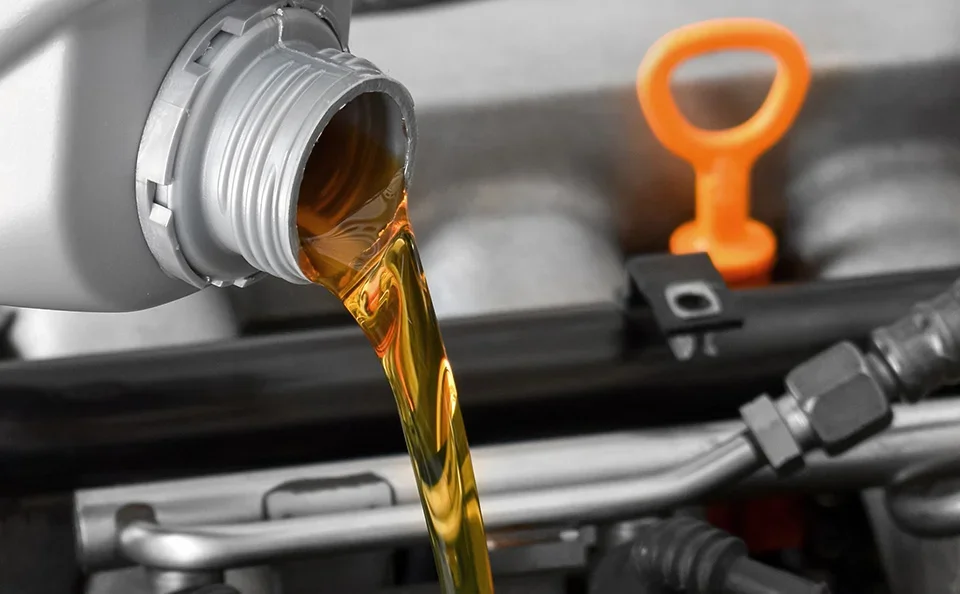
Oil Change Service in Warrenton, OR: What Drivers Should Know

Oil is the one fluid your engine can't run without, yet it's often the maintenance item drivers put off longest. Whatever's parked in your driveway, staying on top of oil changes keeps your engine running smoothly for years. If your vehicle is due for oil change service in Warrenton, OR, you can schedule service online now and get it handled before small issues turn into big ones. Why Regular Oil Changes Matter for Your Vehicle Oil does far more than just "lubricate" your engine. It reduces friction between moving parts, cools components that coolant can't reach (think crankshaft, pistons, camshaft, bearings), and cleans the engine by trapping dirt and debris as it circulates. Detergents and dispersants in the oil keep contaminants suspended until the oil becomes saturated and needs replacing. Clean oil also cuts down on friction enough to improve your gas mileage, and that adds up whether you're running errands around town or heading up the coast. The Role of Oil in Engine Performance and Longevity Every time your engine runs, oil is working overtime. It protects metal surfaces from wear, fights off corrosion and rust, and manages heat in spots your cooling system simply can't touch. As oil ages, it loses its ability to do these jobs effectively, which puts extra stress on internal components with every mile driven. Risks of Skipping or Delaying Oil Changes Skip enough oil changes, and old oil breaks down into thick, tar-like sludge that clogs oil passages. Degraded oil also allows deposits to build up on pistons, valves, and injectors, forcing a richer fuel-air mixture that burns more fuel and increases emissions. Acidic, aged oil corrodes metal parts, and once lubrication fails, you're looking at metal-to-metal wear that shortens engine life. Skipping your manufacturer's recommended maintenance schedule can also void your vehicle's warranty, an expensive risk for something this routine. How Oregon Coast Driving Conditions Affect Your Oil Driving near the Oregon Coast comes with its own set of challenges for engine oil. Wet roads, shifting weather, and salt-laden air create conditions that push oil to work harder than it would inland. Moisture, Salt Air, and Stop-and-Go Traffic in Warrenton Salt accelerates rust, and along the coast, humidity, heat, and airborne salt create oxidation conditions year-round, unlike the seasonal road salt drivers deal with elsewhere. That salt air doesn't stay outside the engine bay either. It works its way into the fuel system, corroding fuel lines, battery terminals, clamps, and brackets over time. Short trips are common around Warrenton, quick runs to the store or drives across town, and that creates its own problem. Trips under five miles rank among the top "severe service" conditions because the engine never fully warms up. Moisture and acids from combustion blow-by accumulate in the oil instead of burning off. If your daily driving looks like this, your oil change interval on the Oregon Coast probably needs to be shorter than the standard recommendation. How Often You Need an Oil Change: It Depends There's no single answer to how often you need an oil change. It depends on your vehicle, the oil type, your mileage, and how you drive. A flat number without any questions about your driving habits is just a guess. Mileage, Time, and Manufacturer Guidelines Check your owner's manual first for interval guidance; it typically specifies "whichever comes first," time or mileage. Oil degrades with age as well as use. Many newer vehicles include oil life monitoring systems that track engine operating conditions and usage, among other factors, giving you the best real-world estimate for your specific vehicle. Conventional vs. Synthetic Oil Change Intervals Conventional oil and filters generally need replacement every 5,000 to 7,500 miles. Semi-synthetic blends suit vehicles carrying heavier loads or covering longer highway distances. Full synthetic oil is often rated for 5,000 to 10,000 miles by automakers, and vehicles with oil life monitors may stretch that to 10,000 to 15,000 miles. Toyota recommends a synthetic oil change every 10,000 miles or 12 months, while Ford suggests roughly 7,500 miles or six months. Even low-mileage drivers should change synthetic oil every six months to a year, regardless of miles driven. Compare your options below: Oil Type Recommended Interval Best For Cost Factor Conventional 5,000-7,500 miles Older vehicles, light driving Lower upfront cost Synthetic Blend 6,000-8,000 miles Heavier loads, longer drives Moderate Full Synthetic 5,000-10,000+ miles Most modern vehicles, coastal conditions Higher upfront, fewer changes needed Consumer Reports cautions that while synthetic oil holds up longer, drivers shouldn't exceed the manufacturer's time interval, typically six months to a year for vehicles with low mileage or frequent short trips. How Driving Habits Influence Your Ideal Interval Short trips, stop-and-go traffic, extreme temperatures, and towing can significantly shorten oil life compared to steady highway driving. Severe service conditions include trips under 5 miles, city stop-and-go traffic, towing or hauling, extreme heat or cold, and infrequent vehicle use. As a rule of thumb, plan to change your oil somewhat earlier than the maximum interval if your driving fits any of these patterns. Towing, for example, can put more wear on your engine than the same distance of normal driving. Even hybrid owners aren't exempt. Hybrids run cooler overall, but they still need time-based oil changes because short trips let moisture accumulate in the oil regardless of engine temperature. Warning Signs Your Vehicle Needs an Oil Change Toyota identifies several signs that indicate your vehicle is due for service, including darkened oil, increased engine noise or knocking, excessive exhaust smoke, a burnt oil smell, and a noticeable drop in fuel efficiency. Beyond that list, watch for: A dashboard oil warning light A temperature gauge reading higher than normal Dark or sludgy oil on the dipstick (fresh oil is amber and translucent) Engine noise that wasn't there before Fuel economy that's quietly dropped If you notice any of these, don't wait for your next scheduled visit. Bring your vehicle in sooner rather than later. What's Included in a Professional Oil Change Service A proper oil change service involves more than draining and refilling. It's an opportunity to catch small problems before they become expensive repairs. Oil and Filter Replacement Process Oil collects dirt, debris, and metal particles as it circulates, and the filter is what traps those contaminants. Replacing the filter alongside the oil is a core part of the service. Skipping the filter while changing the oil defeats much of the purpose. Multi-Point Inspection and Fluid Checks A thorough multi-point inspection checks engine oil, transmission fluid, brake fluid, power steering fluid, coolant, and washer fluid, along with the oil and air filters. Technicians also examine brake pad thickness, rotate tires, reset TPMS sensors, and inspect belts for cracking, fraying, or glazing. Hoses get checked for leaks, swelling, or brittleness, and the battery is tested for charge along with a check for terminal corrosion, which matters even more here given how salt air affects battery terminals and brackets along the coast. Fluid top-offs are typically included at no extra charge. This is also where the difference between service options becomes clear. National quick-lube chains and parts-store service counters get you in and out fast, but their model is built around speed rather than a deep inspection of what's actually going on under the hood. A dealership service model, staffed by factory-trained technicians using OEM-spec parts, is better equipped to catch issues in complex vehicle systems and service them correctly the first time. If you're ready to have all of this handled, schedule service online and we'll take care of the rest. Why Choose Lum's Auto Center for Oil Change Service in Warrenton, OR At Lum's Auto Center, we've built our reputation on doing things right. Our technicians are factory-trained and use Toyota Genuine Parts along with OEM-spec fluids across the other makes we service, including Chrysler, Dodge, Jeep, and Ram, so your warranty coverage stays intact and repairs fit correctly the first time. Every visit includes our multi-point inspection at no extra charge, so you leave knowing the condition of your brakes, belts, hoses, and battery too. We also make it convenient: free pickup and return within 20 miles, a no-touch key drop with phone payment for those who want a contact-free appointment, or a sanitized waiting room if you'd rather stay on-site. Drivers coming in from Seaside, Ocean Park, and Tillamook find us just as easy to reach as folks already in Warrenton. Frequently Asked Questions About Oil Change Service How do I know what oil type my vehicle needs? Your owner's manual has this information. Using the wrong viscosity or specification increases engine wear, so it's worth following the manufacturer's requirement rather than guessing based on what a previous vehicle used. How much does an oil change cost? Cost depends on oil type (conventional, blend, or full synthetic), vehicle size, and any additional services performed during the visit. Rather than guessing at a price, check our current service and parts specials or give us a call for a quote specific to your vehicle. Can synthetic oil extend my service interval? Yes, within the limits set by your manufacturer. Synthetic oil is more stable, resists breaking down at high temperatures, flows better in cold weather, and includes additives that offer extra protection. That said, severe driving conditions still shorten the effective interval, so it's worth confirming your specific interval through your owner's manual or your vehicle's oil life monitor. Schedule Your Oil Change Service Today Whatever you drive, staying ahead of your oil changes here on the Oregon Coast doesn't have to be complicated. Our team is ready to get you in, inspected, and back on the road, whether that's a quick synthetic oil change or a full Toyota Express Maintenance visit. Book your oil change and check out our current service and parts specials before your next visit to make sure you're getting the most value for your maintenance dollar.

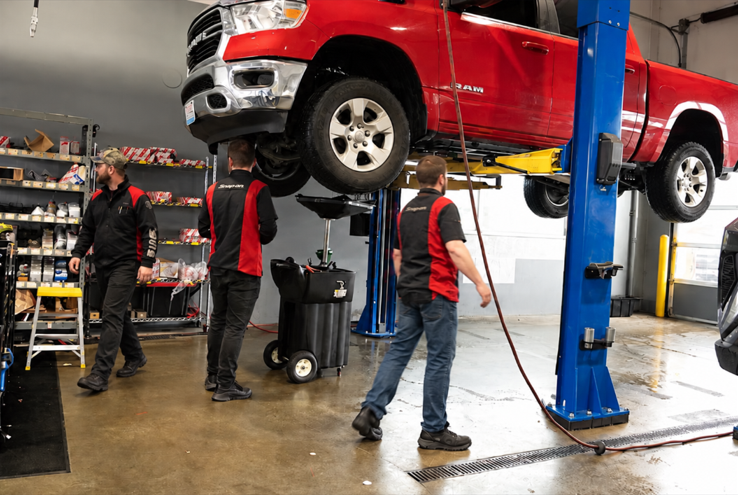
Ram truck raised on lift during service appointment

Auto Service in Warrenton, OR: Schedule Maintenance at Lum's Auto Center

Coastal weather is rough on cars. Between the salt air, the humidity, and the rain that never seems to let up, vehicles driven around Warrenton, Oregon take a beating that drivers in drier parts of the state just don't deal with. Brakes wear out faster here, metal corrodes quicker, and components tend to give out sooner than they should. If you want auto service Warrenton OR drivers can actually count on, you need a shop that's familiar with what this climate does to a vehicle over time, not just one running through a generic maintenance checklist. At Lum's Auto Center, we've serviced cars along this stretch of coastline for decades, so we know exactly what the salt air does to a car after a few Oregon winters. You can schedule service online whenever you're ready, or keep reading to see how we handle maintenance for coastal drivers. Why Warrenton Drivers Trust Lum's Auto Center for Auto Service We've been family-owned since 1969, and our roots run deep in Clatsop County and Pacific County. Generations of local drivers have brought their vehicles to us, and that kind of loyalty doesn't happen overnight. It comes from showing up year after year with straight talk and repairs people can rely on. Our location works well for drivers throughout the region. Drivers coming from Astoria, Seaside, Ocean Park, and Tillamook all find us within easy reach, which matters for coastal communities that don't have a lot of dealership options close by. That convenience matters when your car needs attention and driving an hour inland just isn't practical. Routine Maintenance Services That Keep Your Vehicle Running Strong Staying ahead of routine maintenance is the simplest way to avoid expensive repairs later. We handle the full range of upkeep that keeps vehicles running reliably through wet Oregon Coast winters and salty summer air alike. Oil Changes and Fluid Service An oil change Warrenton Oregon drivers can trust starts with more than just the oil itself. We also check coolant, brake fluid, and other fluid levels during the same visit, since low or degraded fluids cause engine strain that tends to show up later as a much bigger repair. Regular oil changes protect engine components from wear and help maintain fuel efficiency over the life of the vehicle. Brake Inspections and Repairs Brakes take a beating on coastal roads, especially with the stop-and-go traffic that hits Warrenton and Astoria during tourist season. Our complimentary brake inspection covers pads, rotors, and the overall braking system, so you know exactly where things stand before a small issue becomes a safety concern. Catching thin pads or a warped rotor early usually means a simpler, cheaper fix. Tire and Alignment Checks Tires wear unevenly when alignment is off, and that uneven wear costs you money through shorter tire life and worse fuel economy. We use Hunter alignment equipment to get precise readings on your vehicle's alignment. Proper alignment extends tire life, improves fuel efficiency, and makes handling better, which counts for a lot on wet or winding stretches of Highway 101. Battery Testing and Inspections Cold, damp mornings on the coast are tough on batteries. Our battery health checks look at the connections and overall condition, catching a weak battery before it leaves you stranded on one of those mornings. It's a quick check that can save you a genuinely inconvenient surprise. Why Scheduling Ahead Matters for Oregon Coast Drivers Walking in without an appointment might work in a pinch, but booking ahead gives you a real edge, especially for anything beyond a quick check. How Advance Scheduling Helps Our Service Team Prepare When you book ahead, our team can confirm the parts and tools your specific vehicle needs before you even arrive. That prep work cuts down on wait times, which matters a lot for CDJR service Warrenton drivers need for more involved jobs like brake work or diagnostics. Catching Small Issues Before They Become Costly Repairs Routine, scheduled visits give our technicians a chance to spot problems while they're still small, a slightly worn belt, a minor brake fluid leak, corrosion just starting on a fitting. Catching these early is almost always cheaper and faster than waiting for something to fail on the road. How Coastal Conditions Impact Your Maintenance Needs Warrenton's climate is a big part of what makes coast auto care different from service inland. Temperatures here stay fairly mild year-round, generally sitting somewhere between 39°F and 68°F, but rainfall is the real factor to plan around. The area sees roughly 67.2 inches of rain annually, with December alone bringing around 10.6 inches. That's a lot of moisture sitting on roads, undercarriages, and exposed metal parts for months at a time. Oregon's coastline stretches over 360 miles, and along all of it, high humidity paired with salt-laden air speeds up rust and corrosion. Salt particles settle on vehicle exteriors and accelerate oxidation in ways drivers further inland rarely have to think about. Over time, this exposure eats away at metal, degrades electrical systems, and can affect overall vehicle performance and safety. That's why coastal auto repair often means paying closer attention to brake lines, exposed fasteners, and electrical connections than you'd see in a drier climate. If you're not sure whether your maintenance schedule accounts for these factors, it's worth a quick conversation with our team. You can book your service appointment and mention any specific concerns, a rattle you've noticed, corrosion you've spotted, so we can take a closer look. Toyota and CDJR Service Expertise at Lum's Auto Center We service Toyota, Chrysler, Dodge, Jeep, Ram, and many other makes, so most vehicles on the road in Warrenton can get expert attention here. Our certified technicians use genuine Toyota parts for Toyota service Warrenton drivers rely on, so repairs match factory specs. If you drive a newer Toyota, you may also be covered under ToyotaCare, a no-cost maintenance plan covering normal factory-scheduled maintenance for 2 years or 25,000 miles, whichever comes first. That coverage includes oil changes, tire rotations, fluid level adjustments, and multi-point inspections, which takes a lot of the guesswork out of staying on schedule. For CDJR vehicles, we carry genuine Mopar parts for Chrysler, Dodge, Jeep, and Ram, so repairs and replacements match what the manufacturer intended. Having both Toyota and CDJR expertise under one roof means a lot of households in the area can bring every vehicle they own to the same shop instead of splitting service between different locations. How to Schedule Your Auto Service Appointment Online Booking online takes just a few minutes once you have your information ready. Before you start, it helps to have your vehicle's year, make, model, trim, current mileage, and VIN on hand, along with a general idea of what service you need. Start by entering your name, email, and phone number. From there, add your vehicle details, year, make, model, trim, mileage, and VIN, so our team knows exactly what they're working with before you arrive. Next, select the services you're requesting, whether that's a routine oil change, a brake inspection, or something more specific. Once everything looks right, submit the request, and our service team will follow up to confirm your appointment time. This system makes it simple to schedule auto service Warrenton residents need without picking up the phone during business hours. If you'd rather call, our team is happy to help you set things up directly at 503-861-1144. Ready to Get Started? Whether you need a straightforward oil change or a closer look at how coastal conditions are affecting your vehicle, our service center is set up to handle it. Reach out or schedule service online today, and let our team keep your vehicle running the way it should, mile after coastal mile. Frequently Asked Questions About Auto Service in Warrenton, OR How do I schedule auto service in Warrenton with Lum's Auto Center? The easiest way is through our online scheduler, where you enter your contact information, vehicle details, and the service you need. You can also contact our service center directly if you'd rather speak with someone. How often should I schedule maintenance on the Oregon Coast? Manufacturer-recommended intervals are a good starting point, but coastal driving conditions, salt air, high humidity, frequent rain, can call for closer attention to brakes, tires, and corrosion-prone parts. If you drive regularly through Warrenton, Astoria, Seaside, or Tillamook, it's worth having these areas checked a bit more often than the manual suggests. What maintenance services can I book online? Our online scheduler covers a wide range of services, including oil changes, brake inspections, tire and alignment checks, battery testing, and other routine maintenance and repair work. If you're not sure which service you need, describe the issue when booking and our team will help sort it out. Does Lum's Auto Center service both Toyota and CDJR vehicles? Yes. We have dedicated expertise in both Toyota and CDJR service, using genuine Toyota parts and genuine Mopar parts respectively. That means Toyota, Chrysler, Dodge, Jeep, and Ram owners can all count on manufacturer-aligned repairs at our Warrenton location.

Technician inspecting vehicle engine during service

Complimentary Maintenance and Vehicle Care Benefits for Used Vehicle Buyers

Buying a used vehicle is one of the smartest financial decisions you can make, but only if you understand what comes with it after you drive off the lot. Many buyers focus almost entirely on price and overlook something just as valuable: what kind of ongoing care is included in the purchase. Whether it's complimentary maintenance, scheduled service reminders, or access to factory-trained technicians, these benefits can save you real money and real headaches over time. At Lum's Auto Center, we've been helping Oregon Coast and Southwest Washington drivers make smart ownership decisions since 1969. That experience has taught us that a great used car deal doesn't end at the sale. Why Maintenance Benefits Matter When Buying a Used Vehicle A used vehicle comes with its own history, and that history means staying on top of maintenance matters more than people often realize. Routine care like oil changes, tire rotations, and fluid checks directly affects how long a vehicle lasts and how reliably it performs. When a dealership or manufacturer offers complimentary maintenance on used vehicles, it removes some of the financial pressure that comes with early ownership. A dealership that backs its used inventory with maintenance packages believes in what it's selling. That's worth paying attention to when you're writing a significant check. Types of Vehicle Care Benefits That May Come With a Used Car Not every used vehicle purchase includes the same level of support. What's available depends on the dealership, the vehicle's certification status, and sometimes the original manufacturer's coverage. There are several common types of complimentary service worth knowing about before you sign anything. Oil Changes and Routine Fluid Services Oil changes are the most basic form of vehicle care, but they're also the most consistently important. Some dealerships include a set number of complimentary oil changes as part of a maintenance package tied to the purchase. Others may offer bundled service packages covering multiple fluid services, including transmission fluid, coolant, and brake fluid checks. If a complimentary maintenance offer includes oil changes, pay attention to how many are covered and whether they apply to synthetic or conventional oil. Knowing this upfront helps you plan your ownership costs and take full advantage of what's included. Tire Rotations and Multi-Point Inspections Tire rotations extend the life of your tires significantly, and multi-point inspections give you an early look at developing issues before they become expensive repairs. Some maintenance packages bundle these services together at no extra cost for a defined period after purchase. A multi-point inspection is particularly valuable when buying used because it gives you a baseline picture of the vehicle's condition at the time of sale. If a dealership offers this as part of their complimentary service, take them up on it every time it's available. Service Reminders and Scheduled Maintenance Alerts Staying on schedule with maintenance is easier said than done. Some dealerships include digital service reminders or scheduled maintenance alerts as part of their vehicle care benefits. You get a heads-up when your vehicle is due for an oil change, tire rotation, or other routine service, without having to track everything yourself. It's not as flashy as a free maintenance package, but it's a practical perk that helps you protect your investment over time. Factory-Backed Maintenance: When It Might Still Apply to a Used Vehicle One detail many used car buyers miss is that factory-backed maintenance plans sometimes transfer with the vehicle. If the original owner purchased a new car with a complimentary maintenance package and didn't use it up, that coverage may still be active when the vehicle changes hands. It's worth distinguishing this from certified pre-owned (CPO) coverage. A CPO program is a manufacturer-backed warranty that recertifies the vehicle and typically covers mechanical repairs for a defined period. Factory-backed maintenance covers scheduled services like oil changes and tire rotations. The two are separate, and a vehicle can have one, both, or neither. ToyotaCare is one of the best-documented examples of a factory-backed maintenance program. The table below outlines what it covers: Coverage Details What's included Maintenance No-cost factory-scheduled maintenance (the first five services at 5K, 10K, 15K, 20K, and 25K miles), covering oil and filter changes, tire rotations, fluid inspections, and multi-point inspections Maintenance duration 2 years or 25,000 miles, whichever comes first (most models). Mirai is covered for 3 years or 35,000 miles Roadside assistance 24-hour roadside assistance included for 2 years and unlimited miles (most models); 3 years and unlimited miles for select EVs such as the bZ4X. Covers jump starts, tire service, fuel delivery, lockout, towing, and winching If a used Toyota you're considering was originally sold with ToyotaCare and is still within those time and mileage limits (2 years or 25,000 miles for most models), that coverage may still be active. ToyotaCare is fully transferable to a private buyer as long as the coverage period hasn't expired. Terms vary by model and can change, so always verify directly with us before assuming coverage applies. The key is to ask. When you're looking at a used vehicle, request documentation on any existing manufacturer plans, coverage history, and remaining service eligibility. A reputable dealership will have this information ready or help you track it down. How Dealership Service Support Adds Confidence After Purchase The ongoing support of a full-service dealership matters well beyond what any maintenance package formally spells out. Buying from an established dealership versus a private seller or smaller lot has real, tangible advantages. Ongoing Access to Trained Technicians When you purchase through a dealership with an in-house service department, you're not just buying a car. You're buying access to factory-trained technicians who know the vehicles they service. Our service center at Lum's Auto Center handles routine maintenance, engine diagnostics, wheel alignments using our Hunter Alignment System, and everything in between. Having consistent access to the same trained staff who know your vehicle's history simplifies every service visit. You're not starting from scratch with a new shop every time something comes up. Warranty-Adjacent Protections and Add-On Service Plans Even when a used vehicle isn't eligible for manufacturer warranty coverage, there are often options to extend your protection. Many dealerships offer add-on service plans or maintenance packages that cover major components for a set period or mileage. These plans vary widely, so it's worth understanding exactly what's included, what's excluded, and whether the dealership honors them in-house. Some packages also include roadside assistance, towing coverage, or rental reimbursement while your vehicle is being serviced. Always read the terms carefully and ask our team to walk you through what each plan actually covers. Questions to Ask Before You Buy: Getting Clarity on What's Included Going into a used vehicle purchase prepared means knowing the right questions to ask. Raise these with our sales or service team before you commit: Ask whether any complimentary maintenance is included with the purchase, how many visits it covers, which services are included, and what the time or mileage limit is. Ask us to check the vehicle's age and mileage against the original program limits for any factory-backed maintenance. For a Toyota, for example, we can confirm whether ToyotaCare is still active based on the vehicle's VIN and service history. If the vehicle is certified pre-owned, ask what the CPO warranty covers and how that differs from any included maintenance benefits. Ask for a written breakdown of any maintenance packages that can be added on, including what each covers and what it excludes. Ask how service scheduling works, and whether a loaner or rental vehicle is available if your car needs extended shop time. For drivers in Warrenton, OR, vehicle rentals are available at our location, which is a practical option to keep in mind. Getting these answers in writing before you sign protects you from surprises down the road. Making the Most of Your Used Vehicle's Care Benefits Even the best maintenance package won't help you if you don't use it. Once you've purchased your vehicle and know what's included, schedule services as soon as they're due, keep records of every appointment, and use the dealership's reminders or alerts to stay on track. Staying current with scheduled maintenance also protects your vehicle's value. A consistent service history makes your car easier to sell or trade in later and shows it was well cared for throughout your ownership. If you purchased a vehicle with a complimentary service period, use every visit included. Getting the full value of what you paid for is simply good ownership practice. Talk to the Team at Lum's Auto Center Before You Drive Away Understanding your vehicle care benefits before you finalize a purchase is essential. As a family-owned dealership serving the Oregon Coast and Southwest Washington since 1969, we take the post-sale relationship just as seriously as the sale itself. Our team is ready to walk you through every detail of what's included with any used or certified pre-owned vehicle on our lot: available complimentary maintenance, remaining factory-backed coverage, add-on service plans, and what our in-house service center provides. Browse our current pre-owned inventory online, or reach out to us directly to connect with a team that's genuinely invested in your long-term ownership experience.

2023 Kia Forte LXS parked at dealership lot

Pre-Owned Vehicles for Sale in Warrenton: How to Compare Cars, Trucks and SUVs

Shopping for a used car involves more than picking a color and checking the sticker. Whether you need fuel efficiency for a daily commute or a capable truck that handles the Oregon Coast's rugged terrain, the decision takes real thought. For drivers searching for pre-owned vehicles for sale in Warrenton, OR, today's used market offers more options and better pricing transparency than most buyers expect. Browse our pre-owned inventory to see what's currently available, and read on for everything you need to compare options with confidence. Why Warrenton, OR Drivers Are Choosing Pre-Owned Vehicles Used cars have become the practical choice for a growing number of Oregon Coast households. New vehicles lose a significant portion of their value the moment they leave the lot, meaning a well-maintained used car can deliver similar reliability at a fraction of the original cost. For families managing real budgets, that difference matters. Beyond the purchase price, used vehicles typically come with lower registration fees, reduced insurance premiums, and flexible financing options. When you factor in the wider selection of makes and body styles available on the used market, it becomes clear why so many Warrenton drivers are skipping the new car showroom altogether. Matching the Right Body Style to Your Oregon Coast Lifestyle No single vehicle type suits every driver in Warrenton. Your daily routine, family size, and weekend activities all shape what will actually serve you well. Before evaluating specific vehicles, it helps to narrow down the body style that fits your life on the Oregon Coast. Body Type Typical Use Case Cargo Space Fuel Economy Drivetrain Options Best For Seating Compact/Midsize Car Daily commuting, errands Limited trunk Highest FWD City driving, fuel savings 4–5 Crossover Family hauling, light outdoor use Moderate Good FWD, AWD Coastal commutes, versatility 5–7 SUV Family travel, towing, off-road Large Moderate AWD, 4WD Wet weather, rugged terrain 6–8 Pickup Truck Towing, hauling, work use Truck bed Lower RWD, 4WD Coastal terrain, cargo, work 2–6 When a Car Is the Right Fit for Warrenton Commuters Compact and midsize sedans remain one of the most practical options for daily drivers in Warrenton and the surrounding area. They're easier to park, lighter on fuel, and generally cost less to insure and maintain than larger vehicles. If your routine involves commuting to Astoria or running errands around town, a reliable used sedan handles all of that efficiently without unnecessary overhead. Trucks for Coastal Terrain and Hauling Capability The Oregon Coast is not always gentle on vehicles. Unpaved access roads, towing trailers, and hauling materials for home projects are all real scenarios Warrenton drivers face. Trucks earn their place here because of their towing capacity, cargo space, and durability under demanding conditions. The used truck segment offers a solid range of options across multiple capability levels. SUVs for Family Practicality and All-Weather Confidence For families, SUVs tend to strike the best balance between everyday comfort and outdoor readiness. They seat more passengers, carry more gear, and many come with AWD, which adds real confidence during the wet, unpredictable weather common along the Oregon Coast. A used SUV handles school pickups, grocery runs, and coastal road trips with equal ease. How to Evaluate Mileage, Condition, and Vehicle History Once you've settled on a body style, the evaluation process begins. Two vehicles of the same year and category can vary dramatically in quality depending on how they were driven and maintained. What Mileage Ranges Actually Tell You Mileage is one of the first numbers buyers check, and for good reason. Lower mileage generally means less mechanical wear, but it tells only part of the story. A vehicle with 80,000 miles and a consistent maintenance history will often outlast a lower-mileage option where oil changes were skipped and repairs ignored. For most modern vehicles, 12,000 to 15,000 miles per year is considered average. Look at mileage in context rather than as a standalone figure. Why Service Records and Vehicle History Reports Matter A CARFAX report gives you documented insight into a vehicle's past: accident history, ownership records, title status, and odometer readings. Service records go one step further by confirming that routine maintenance was actually performed. Together, these documents help you verify what the seller tells you and identify red flags before you commit. We provide these reports upfront at Lum's Auto Center, and any hesitation to share them from any seller should give you pause. Setting Your Budget and Understanding Total Cost of Ownership The purchase price is just the starting point. A realistic budget accounts for insurance, fuel, registration fees, and routine maintenance. A vehicle with a lower purchase price but higher fuel consumption or expensive parts can end up costing more over time than a slightly pricier, more economical option. Financing a Used Car: What to Expect Most buyers finance their purchase rather than paying cash outright. When reviewing financing terms, pay close attention to the interest rate, loan length, and total amount paid over the life of the loan. Shorter loan terms mean higher monthly payments but less paid in interest overall. Getting pre-approved before you shop gives you a clearer picture of what you can comfortably afford. At Lum's Auto Center, you can get pre-approved for financing online before setting foot on the lot, or work through the process in person with our finance team if you prefer a face-to-face conversation. How Your Trade-In Affects Your Purchase If you already own a vehicle, trading it in can meaningfully reduce what you owe on your next purchase. Rather than selling privately and managing that transaction separately, you bring your current vehicle to the dealership, receive an appraised value, and apply it directly toward the next one. A few factors shape that appraisal: condition, mileage, and how much demand exists right now for that particular body style. Getting an estimate before you visit gives you negotiating confidence. At Lum's, trade-in appraisals are part of the buying process, and when paired with financing pre-approval, you're in a much stronger position to make a clear-headed decision. What to Look for Before You Commit to a Used Car A thorough pre-purchase inspection should always precede any final decision. Check the exterior for uneven panel gaps, paint inconsistencies, or rust Inspect the interior for wear that seems excessive relative to the mileage Test every feature: windows, climate controls, and infotainment During the test drive, listen for unusual sounds from the engine, suspension, or brakes Confirm the CARFAX report and service records are available and reviewed Consider requesting an independent mechanic's inspection for an unbiased assessment The test drive is non-negotiable. Pay attention to how the vehicle accelerates, brakes, and handles at different speeds. We welcome these questions at Lum's Auto Center and are happy to walk you through any vehicle's documented history. Browse Pre-Owned Vehicles for Sale in Warrenton at Lum's Auto Center Lum's Auto Center has served the Pacific Northwest since 1969 as a family-owned dealership with deep roots in the local community. We carry a broad inventory of used cars, trucks, and SUVs in Warrenton, OR, so you can compare options across makes and body styles in one place. Our online inventory is regularly updated, and you can browse our pre-owned inventory to filter by body type, mileage, and more without visiting in person. The Warrenton team also welcomes walk-ins at 1605 SE Ensign Lane, Warrenton, OR 97146. Beyond the sale, we support long-term ownership through certified service technicians and OEM parts, so the relationship doesn't end at the point of purchase. If you have questions along the way, contact our team and we'll point you in the right direction. Frequently Asked Questions About Buying Pre-Owned in Warrenton, OR What's the difference between used and certified pre-owned vehicles? Certified pre-owned (CPO) vehicles have passed a formal inspection and typically come with an extended warranty. The strongest CPO programs are backed directly by the automaker, though some dealerships offer their own certification as well. Standard used cars may still be in excellent condition but don't carry that formal certification. Ask us which category a vehicle falls into when you inquire. How do I know if a pre-owned vehicle has been in an accident? A CARFAX report documents any reported accidents, insurance claims, and title changes. A pre-purchase inspection by a mechanic can also reveal signs of past structural or body repairs. Can I get financing for a pre-owned vehicle at Lum's Auto Center? You can apply for pre-approval online before visiting or work through financing in person with our team. Terms vary based on credit history, vehicle details, and loan length. Is it worth trading in my current vehicle? For most buyers, yes. Applying your vehicle's appraised value directly toward the purchase reduces the amount you need to finance and eliminates the hassle of a private sale. We offer trade-in appraisals as part of the buying process. What should I bring when visiting a pre-owned dealership in Warrenton, OR? A valid driver's license, proof of insurance, and any documentation for your trade-in vehicle are the basics. If you've been pre-approved for financing, bring that paperwork too. Does Lum's Auto Center serve buyers outside of Warrenton? We serve buyers throughout Clatsop County, the Oregon Coast, and Southwest Washington. Our online tools make it easy to shop remotely, and our team is here whenever you're ready to visit.

2024 Toyota RAV4 parked at dealership lot

Used SUVs for Sale Near Astoria and Warrenton: What Families Should Compare

Finding the right SUV for your family goes well beyond budget. You need something that holds up on rainy coastal drives, fits everyone comfortably on a road trip, and still handles a full grocery run on the way home. For families in the Astoria and Warrenton area, the used SUV market offers real value, but only if you know what to compare before signing anything. Browse our used SUV inventory to see what's currently available at Lum's Auto Center in Warrenton. Why Buying a Used SUV Near Astoria and Warrenton Makes Sense for Families Pacific Northwest families put their vehicles through a lot. Rainy coastal roads, gravel back routes, the occasional snowy pass, and everyday commuting wear on a vehicle in ways that mild-climate driving simply doesn't. Buying used instead of new lets you get more SUV for your money. You might step into a higher trim level or add all-wheel drive at a price point that would only get you a base model if you were buying new. Shopping locally also has practical advantages. When you're looking at used SUVs near Astoria or Warrenton, you can see the vehicle in person, test drive it on the roads you actually use, and work with people who know the region. Lum's Auto Center, a family-owned dealership serving the Pacific Northwest since 1969, is located at 1605 SE Ensign Lane, Warrenton, OR, with a well-stocked inventory of used SUVs across multiple brands. Being able to talk to someone who knows local driving conditions, for a purchase you'll be living with for years, is worth more than people often realize. Seating and Cargo Space: Matching the SUV to Your Household Before you start browsing used SUVs for sale near Astoria, OR, the most useful thing you can do is get honest about how much space your family actually needs. Think about a typical Tuesday with two kids, a dog, a stroller, and sports gear in the back. That's your real benchmark. Two-Row vs. Three-Row Configurations Two-row SUVs work well for smaller families who want utility without the bulk. They tend to be easier to park, more fuel-efficient, and often feel sportier to drive. Popular two-row options in the used market include the Toyota RAV4, Honda CR-V, and Chevrolet Equinox. Three-row SUVs make sense when you regularly carry five or more passengers. The Toyota Highlander (which seats 7-8), Chevrolet Traverse, and Jeep Grand Cherokee L all offer genuine third-row seating rather than the cramped jump seats found in some smaller crossovers. Worth noting: the standard Jeep Grand Cherokee is a two-row, five-passenger SUV. If you need that third row, you specifically want the Grand Cherokee L. If your household includes teenagers or you often carpool, the extra row is worth the added footprint. Cargo Flexibility for Everyday Errands and Weekend Trips Even within the same class, cargo capacity can vary significantly between models and trim levels. Pay attention to cargo volume behind the third row. Some three-row SUVs leave almost no usable space behind the rearmost seat when it's occupied. Fold-flat rear seats are worth prioritizing, and 60/40 or 40/20/40 split configurations give you flexibility to carry both passengers and cargo at the same time. AWD, 4WD, and Fuel Economy on Oregon's Roads All-Wheel Drive vs. Four-Wheel Drive: What Families Actually Need AWD systems automatically distribute power between all four wheels as needed, making them ideal for everyday driving in wet and slippery conditions without any driver input. For the majority of Oregon coastal driving, a used SUV with AWD delivers the traction you need. Four-wheel drive systems, more common on truck-based SUVs like the Jeep Grand Cherokee, are designed for more demanding off-road conditions and require the driver to engage the system. Unless your family regularly tackles rugged terrain or serious snow, AWD is typically the more practical and fuel-efficient choice. AWD models carry a slight price premium over two-wheel drive counterparts, but the added confidence on wet Oregon roads usually justifies it. Safety Features Worth Prioritizing in a Used SUV Safety matters most when you're transporting kids. The good news is that many used SUVs, even models from several years back, come well-equipped with features that meaningfully reduce crash risk. How to Read NHTSA and IIHS Ratings on Used Models The National Highway Traffic Safety Administration (NHTSA) and the Insurance Institute for Highway Safety (IIHS) both publish crash test ratings for most vehicle models. NHTSA uses a five-star system across multiple categories, while IIHS awards ratings of Good, Acceptable, Marginal, and Poor based on specific crash scenarios. Ratings can vary between model years even for the same nameplate, so always look up the specific year you're considering on both websites. This step takes less than five minutes and tells you a great deal about how a vehicle was engineered to protect its occupants. Among the models families frequently consider, the Honda Pilot earned an IIHS Top Safety Pick+ for 2024 and consistently scores well across both NHTSA and IIHS evaluations. The Toyota Highlander has earned Top Safety Pick recognition for 2024-25 model years, and the Jeep Grand Cherokee was named an IIHS Top Safety Pick in the midsize SUV category for 2024, with the 2025 model earning a five-star NHTSA overall rating Driver-Assist Technology to Look for by Model Year For families, the most valuable driver-assist systems include lane departure warning, blind-spot monitoring, rear cross-traffic alert, and rearview cameras. Rearview cameras became federally mandated on new vehicles starting with the 2018 model year, so any used SUV from 2018 onward should include one. Forward collision warning and automatic emergency braking became more broadly available starting around 2016 to 2018. Features like adaptive cruise control and lane-keeping assist show up in higher-trim models from 2019 and beyond. If you're comparing options and want to see what's currently in stock on the Oregon Coast, view our current used SUV inventory and filter by the features that matter most to your household. Evaluating Mileage, Condition, and Service History Mileage is the first thing most buyers look at, but it only tells part of the story. A well-maintained SUV with 90,000 miles can be a better investment than a neglected one with 50,000. What Vehicle History Reports Reveal Before You Buy A vehicle history report from CARFAX gives you a snapshot of a vehicle's past: ownership history, title status, reported accidents, mileage records, service records from dealerships and repair shops, commercial-use history, and odometer accuracy. Treat this as a non-negotiable step before purchasing any used SUV. Pay close attention to title issues. A salvage title means the vehicle was declared a total loss at some point, which can affect structural integrity, insurance coverage, and resale value. A clean title with consistent mileage records and documented maintenance is what you want to see. Inspection Checklist for Used SUVs A vehicle history report covers reported events, but it doesn't replace a physical inspection. Before buying, walk through these key areas: Tires: check tread depth and look for uneven wear, which points to possible alignment problems Brakes: listen for grinding or squealing and test pedal response Engine: look for leaks, unusual noises, or smoke at startup Transmission: shifts should feel smooth without hesitation or slipping Suspension: drive over uneven surfaces and note any bumps, vibrations, or pulling Interior: test windows, locks, and climate controls to confirm everything functions Most importantly, have the vehicle inspected by a certified technician before you finalize the purchase. We offer full inspection capabilities at our Warrenton location, covering brake condition, engine diagnostics, suspension wear, and transmission health. Daily Driving Comfort and Features Families Actually Use Bluetooth connectivity is essentially a baseline expectation now, and most SUVs from 2015 onward include it. Apple CarPlay and Android Auto became more broadly available starting around 2018 to 2019 and are genuinely useful for families who rely on navigation apps. Rear legroom, climate vents for back-seat passengers, and USB charging ports in the second and third rows all reduce friction on longer trips. Heated front seats, power liftgates, and dual-zone climate control show up frequently in mid-tier and higher trims of used SUVs, often at prices well below what those features would cost new. Find Your Family's Next Used SUV Near Astoria, OR Finding the right used SUV comes down to knowing what actually matters for your specific situation. Seat count, cargo flexibility, drivetrain, safety ratings, service history, and daily comfort all factor into a decision you'll be living with for years. Families searching for used SUVs near Astoria, OR, or along the broader northwest Oregon coast have a regional dealership worth knowing. Lum's Auto Center brings over five decades of local experience, a varied inventory of used SUVs, and a service team equipped to keep your vehicle running long after purchase. Whether you're just starting your search or ready to compare specific models, browse our used SUV inventory or contact our team to get help narrowing your options. You can also reach us directly at 503-861-1144.

Used Ram 1500 RHO parked at dealership lot

Used Trucks for Sale in Warrenton, OR: Toyota, Ram, Chevy and GMC Options

Finding the right truck near the Oregon Coast means matching a capable, durable vehicle to a lifestyle that involves salty air, wet roads, weekend fishing trips, and the occasional heavy haul. If you're searching for used trucks for sale in Warrenton, OR, we carry Toyota, Ram, Chevrolet, and GMC trucks at Lum's Auto Center built for exactly that kind of use. Browse our used truck inventory to see what's currently available, then use this guide to understand what to look for before you buy. Why Used Trucks Make Sense for Life on the Oregon Coast The Oregon Coast puts real demands on a vehicle. Boat ramps turn to mud, logging roads stay rough and gravelly, and the coastal moisture is relentless. Trucks here earn their wear fast. Buying used is a smarter entry point for that environment. You're not driving something brand new into conditions that will immediately test its finish and components. New vehicles lose a significant portion of their value within the first few years of ownership, so buying used means someone else absorbed that initial depreciation. You get a capable, well-equipped truck at a price that leaves room for accessories or upgrades. For most buyers in the Warrenton area, that tradeoff is a straightforward win. Popular Used Truck Brands to Consider in Warrenton, OR Toyota, Ram, Chevrolet, and GMC all show up consistently in local inventory for good reason. Each brand brings a distinct set of strengths suited to Oregon Coast and Pacific Northwest driving. Toyota Tacoma and Tundra: Coastal-Ready Reliability The Toyota Tacoma is the go-to midsize option for buyers who want a truck that holds its value, handles off-road terrain, and requires minimal drama over the long haul. Its compact footprint makes it maneuverable on coastal backroads while still delivering genuine capability. TRD Off-Road and SR5 trims are common in the used market and well-matched to Clatsop County conditions. The Tundra steps things up for buyers needing a full-size platform. Known for long-term durability and strong V8 power (or efficient twin-turbo V-6), it's a solid choice if you're regularly towing a boat or trailer on coastal highways. Ram Trucks: Capability for Work and Weekend Hauling Ram has built a loyal following among buyers who need genuine workhorse performance. The Ram 1500 Big Horn and Tradesman offer strong towing numbers and interior quality that consistently surprises first-time Ram buyers. The Ram 2500 Power Wagon and Tradesman trims cover heavier recreational and commercial hauling. Engine options across Ram model years give real flexibility. V6 configurations work well for everyday use and fuel economy, while the heavy-duty setups handle serious towing without complaint. That range makes it easier to find a used Ram that fits both your capability needs and your fuel budget. Chevrolet Silverado and GMC Sierra: Versatile Picks at Multiple Price Points The Silverado and Sierra share a platform but each brings its own character. The Silverado LT and LTZ tend to be the more straightforward work trucks, available across a wider range of price points in the used market. The Sierra SLE and SLT lean slightly more upscale, offering a refined interior without sacrificing capability. Both trucks offer strong V6 and V8 options, multiple cab and bed configurations, and towing ratings that cover most recreational and light commercial needs across Southwest Washington and the Oregon Coast. Truck Comparison: Toyota, Ram, Chevrolet, and GMC When shopping for a used full-size or midsize truck, towing capacity, bed length, and powertrain are the specs that matter most. The figures below reflect the maximum ratings published for each model across this window, but always remember that real-world capacity depends on the specific engine, axle ratio, cab style, and tow package on the individual truck you are looking at. Model Engine Options Drivetrain Max Towing (properly equipped) Bed Length Options Best Use Case Toyota Tacoma (SR5, TRD Off-Road) 2.7L 4-cyl, 3.5L V6, or 2.4L turbo-4 (2024+) RWD or 4x4 Up to ~6,800 lbs (V6); 6,500 lbs on 2024+ turbo-4 5 ft or 6 ft Off-road recreation, light trailers, coastal backroads Toyota Tundra (SR5, Limited) 5.7L V8 (through 2021); 3.5L twin-turbo V6 or hybrid (2022+) RWD or 4x4 Up to ~12,000 lbs (V6, 2022+); ~10,200 lbs (V8) 5.5 ft, 6.5 ft, or 8.1 ft Boat towing, high-mileage durability Ram 1500 (Big Horn, Tradesman) 3.6L V6, 5.7L HEMI V8 (w/ or w/o eTorque), 3.0L EcoDiesel RWD or 4x4 Up to ~12,750 lbs (HEMI eTorque); 12,560 lbs (diesel) 5.7 ft or 6.4 ft Work hauling, daily-driving comfort Ram 2500 (Power Wagon, Tradesman) 6.4L HEMI V8 or 6.7L Cummins diesel RWD or 4x4 Up to ~19,780–20,000 lbs (diesel); Power Wagon ~10,600 lbs 6.4 ft or 8 ft Heavy commercial and recreational hauling Chevrolet Silverado 1500 (LT, LTZ) 2.7L turbo-4, 5.3L V8, 6.2L V8, or 3.0L Duramax diesel RWD or 4x4 Up to ~13,300 lbs (Duramax/6.2L); ~12,200 lbs in 2019 5.8 ft, 6.6 ft, or 8.2 ft Versatile work and recreation GMC Sierra 1500 (SLE, SLT) 2.7L turbo-4, 5.3L V8, 6.2L V8, or 3.0L Duramax diesel RWD or 4x4 Up to ~13,300 lbs (Duramax/6.2L) 5.8 ft, 6.6 ft, or 8.2 ft Premium finish with full towing capability Always verify the GCWR and tow rating for your specific trim, engine, and axle configuration before towing. Maximum ratings typically require a 2WD configuration, a specific cab/bed combination, and the available max trailering package. Matching Cab and Bed Configuration to Your Lifestyle Crew cab trucks dominate the used market for good reason. A crew cab gives you genuinely usable rear passenger space, which matters if you're regularly hauling family, crew members, or gear you'd rather keep out of the bed. Short beds in the 5–6 ft range suit urban driving and tight coastal roads well. Long beds in the 7–8 ft range are the better call for hauling boats, lumber, kayaks, or camping gear. A crew cab with a 5.5 or 6.5 ft bed hits a practical middle ground for buyers who split time between transporting people and hauling cargo. Think through your typical week before test driving. The right configuration becomes obvious when you map it against your actual use cases. Towing, Hauling, and Work Capability: What to Prioritize Drivetrain and Tow Rating Basics Four-wheel drive is worth prioritizing for most Oregon Coast buyers. Wet winters, soft coastal terrain, and muddy ramps or forest roads make 4x4 a practical asset rather than a luxury. Tow ratings vary significantly by trim, engine, and axle ratio, so always confirm the rating for the specific configuration you're evaluating, not just the base model figure. Payload capacity matters too, especially if you're loading a bed consistently. Overloading strains the suspension, brakes, and frame over time, so matching your load requirements to the truck's rated capacity is worth doing before you commit. Coastal and Outdoor Demands Towing a boat trailer off the Columbia River, carrying ATVs, or loading camping gear for a weekend on the coast all place specific demands on a truck. Corrosion resistance is a consideration that doesn't always show up in spec sheets but matters enormously in a coastal climate. A well-maintained truck with solid undercoating is worth more in this region than a high-spec alternative that spent years near salt water without proper care. What to Look for When Buying a Used Truck in Oregon Evaluating Mileage, Age, and Overall Condition Mileage is a starting point, not a complete picture. A truck with 80,000 highway miles in good condition often has more remaining life than one with 60,000 hard city miles. Service records showing consistent oil changes, transmission services, and routine maintenance tell a better story than a clean exterior with no paperwork. Check the engine bay for oil leaks or cracked hoses. Listen during the test drive for knocking, grinding, or hesitation under acceleration. Vehicle History Reports and Signs of Pacific Northwest Wear A vehicle history report is non-negotiable. Carfax and AutoCheck reports reveal prior accidents, title status, odometer discrepancies, ownership history, and service intervals. For any truck with coastal history, pair that report with a close physical inspection. Specific areas to evaluate: Check the undercarriage and frame rails for rust that has penetrated beyond surface oxidation Look at wheel wells and arches where salt accelerates corrosion eating into the metal Inspect brake lines for rust-through or corrosion that could compromise braking Check the exhaust system for early deterioration from moisture and road salt Look over electrical connections and wiring, particularly in older trucks where corrosion-related failure is common Examine the cab floor and bed for water intrusion or flood damage, including staining and mold odor A pre-purchase inspection from a qualified mechanic costs relatively little and can prevent a costly mistake. Financing and Trade-In Options for Used Truck Buyers Securing financing before you fall in love with a specific truck puts you in a stronger position throughout the buying process. We offer online financing pre-approval so you can understand your budget before you arrive. Start your pre-approval application to see your options ahead of time. If you're replacing an existing vehicle, a trade-in evaluation can offset a meaningful portion of your purchase. We apply that value directly toward your used truck, reducing what you need to finance. Our finance team works with buyers across varying credit histories, so it's worth exploring your options regardless of where you stand. Browse Used Trucks for Sale in Warrenton, OR at Lum's Auto Center Lum's Auto Center has been family-owned since 1969, and our Warrenton location reflects decades of understanding what Oregon Coast buyers actually need. Our inventory spans Toyota, Ram, Chevrolet, and GMC trucks across multiple model years, with our in-house service center handling everything from routine maintenance to major repairs long after the sale. Whether you're after a Tacoma for coastal off-roading or a heavy-duty Ram for work hauling, we're here to help buyers across Warrenton, Clatsop County, and the broader Oregon Coast and Southwest Washington region find the right fit. Browse our used truck inventory to see what's available, or contact our team directly with questions about specific makes, models, or configurations.

Vehicle trade-in value tools displayed on laptop and tablet

How to Value Your Trade at Lum’s Auto Center Before You Shop

Knowing your trade-in value before you shop can make the entire car-buying process easier. It gives you a clearer idea of your budget, helps you compare monthly payment options, and lets you decide whether selling, trading, or waiting makes the most sense. At Lum's Auto Center in Warrenton, OR, you can start the trade-in process online before visiting the dealership. Whether you are planning to buy a new vehicle, shop pre-owned inventory, or simply understand what your current vehicle may be worth, our team can help you review your options. Why Trade-In Value Matters Before You Start Shopping Your current vehicle may be one of the most important parts of your next purchase. If it has equity, that value may be applied toward your next car, truck, SUV, or van. That can potentially reduce the amount you finance, lower your estimated monthly payment, or help you move into a vehicle that better fits your needs. Even if you are not ready to buy immediately, getting a trade-in estimate gives you useful information. It helps you understand where you stand in the current market and whether now is a good time to sell or trade. How to Start Your Trade-In Estimate Online The easiest place to begin is the Lum's Auto Center sell or trade your vehicle page. You can enter basic information about your current vehicle and begin the appraisal process before visiting the dealership. Online tools are a helpful starting point, but the final value may depend on an in-person review. Vehicle condition, mileage, history, market demand, and reconditioning needs can all affect the final offer. Information You Should Have Ready Before requesting a trade-in value, gather the details that help create a more accurate estimate. The more complete your information is, the easier it is for the appraisal team to evaluate your vehicle. Information Needed Why It Matters Year, Make, Model, and Trim Helps identify the exact vehicle and equipment level Mileage Affects value, marketability, and expected reconditioning needs Vehicle Condition Interior, exterior, tire, brake, and mechanical condition all matter Vehicle History Accidents, title status, and ownership history may affect appraisal value Service Records Maintenance records can help support the condition of the vehicle Loan Payoff Details Needed if you still owe money on the vehicle What Affects Your Vehicle's Trade-In Value? Trade-in value is based on a combination of vehicle-specific details and current market conditions. Two similar vehicles can receive different offers if one has lower mileage, better records, stronger equipment, or lower reconditioning needs. Mileage and Mechanical Condition Mileage is one of the first things buyers and appraisers review, but it does not tell the whole story. A vehicle with consistent service history, strong mechanical condition, and fewer repair needs may hold value better than one that has been neglected. Tires, brakes, warning lights, fluid leaks, and drivability can all influence the appraisal. Interior and Exterior Condition Cosmetic condition also matters. Dents, scratches, worn seats, odors, cracked glass, damaged wheels, and missing trim can affect the amount of reconditioning needed before resale. You do not need to make the vehicle perfect before an appraisal, but cleaning it and removing personal items can help the team review it accurately. Vehicle History and Title Status Accident history, title branding, number of owners, and previous use may all affect value. A clean title and well-documented history can support a stronger appraisal. If your vehicle has been in an accident or had major repairs, it is better to be upfront so the appraisal can reflect accurate information. Local Demand in the Pacific Northwest Market demand can shift based on season, fuel prices, inventory supply, and buyer needs. In the Pacific Northwest, trucks, SUVs, hybrids, and all-weather vehicles often attract strong interest because many drivers need capability for wet roads, coastal driving, rural routes, and outdoor recreation. How Trade-In Value Can Affect Your Next Vehicle Purchase If you decide to trade your vehicle toward another purchase, the appraised value may become part of your deal structure. That value can help reduce the amount financed or change your estimated monthly payment. Before visiting, you can browse new vehicle inventory or used vehicle inventory to see what might fit your budget. You can also use the payment calculator to compare different purchase scenarios. What If You Still Owe Money on Your Vehicle? You can still start the trade-in process if your current vehicle has an active loan. The key number is the loan payoff amount. If your vehicle is worth more than the payoff, the difference may create positive equity. If the payoff is higher than the appraised value, you may have negative equity. Neither situation automatically stops you from moving forward, but it does affect your options. Our finance team can help you understand how your payoff, trade-in value, and next vehicle choice work together. You can also begin reviewing financing through our finance center or vehicle financing page. Should You Make Repairs Before Trading In? Minor cleanup is usually helpful. Wash the vehicle, remove personal items, vacuum the interior, and gather service records. However, major repairs are not always worth completing before an appraisal. The cost of fixing a problem may be higher than the value it adds to your offer. If you are unsure, bring the vehicle in as-is and let our team review it. We can explain how the condition affects value and whether any issue is likely to make a major difference. Trade-In Estimate vs Final Appraisal An online estimate is a useful starting point, but it is not always the final number. A final appraisal usually requires an in-person inspection so the dealership can confirm the vehicle's condition, features, mileage, history, and current market fit. Estimate Type What It Means Best Use Online Estimate A preliminary value based on the information entered Early budgeting and shopping preparation In-Person Appraisal A more complete review based on physical condition and market factors Final trade-in or selling decision Questions to Ask During Your Trade-In Appraisal What factors had the biggest impact on my vehicle's value? Does my vehicle have positive or negative equity? Can I sell my vehicle without buying another one? How long is the offer valid? Would my trade-in value change if I chose a different vehicle? What documents do I need to complete the transaction? Frequently Asked Questions About Valuing Your Trade Can I value my trade online before visiting Lum's? Yes. You can start through the sell or trade your vehicle page. An in-person appraisal may still be needed to confirm the final value. Do I have to buy another vehicle to get an appraisal? No. Lum's Auto Center can review your vehicle even if you are not ready to buy another car from us. Does mileage matter more than condition? Mileage is important, but condition, service history, title status, equipment, and current market demand also affect value. A well-maintained vehicle may still be attractive even with higher mileage. Should I clean my vehicle before trading it in? Yes, basic cleaning is a good idea. Remove personal belongings, wash the exterior, vacuum the interior, and bring service records if you have them. This helps the appraisal team evaluate the vehicle clearly. Value Your Trade at Lum's Auto Center Getting your trade-in value before you shop can help you plan with more confidence. Start online through the Lum's Auto Center trade-in page, then visit us at 1605 SE Ensign Lane in Warrenton, OR, to review your vehicle and discuss your next steps. Image by Coinstash Australia is licensed with Unsplash License.

Contact Us

Fill out this form below and we'll contact you shortly
*Required Fields