
Climbing into a lifted truck or tall SUV isn't always graceful, especially with kids in tow or gear to load before sunrise. The right running board can make that step a lot easier. This guide covers what running boards are, how they compare to nerf bars and other step options, and what to check before buying. Feel free to explore running board options we carry at Lum's Auto Center.
What Are Running Boards on a Truck or SUV?
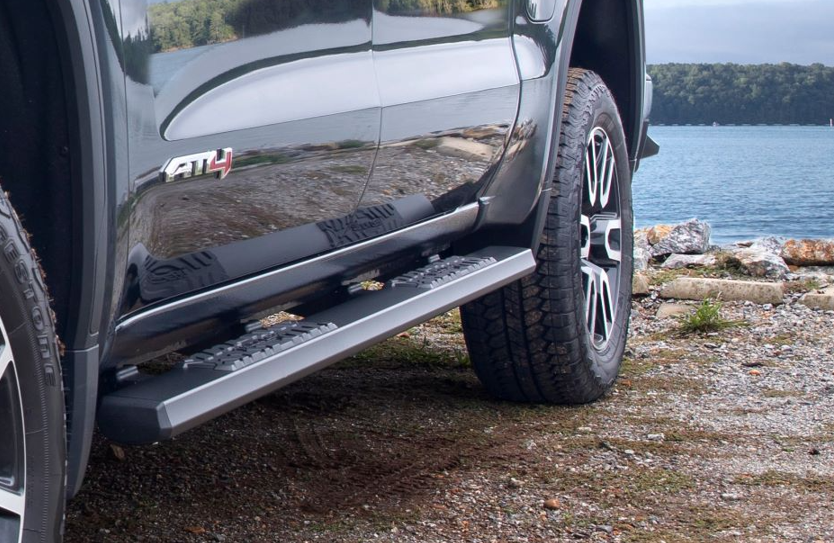
A running board is a flat platform mounted along the lower sides of the vehicle, just below the doors, giving passengers a wider, stable surface to step on when getting in or out. They're common on pickups, large SUVs, off-road builds, and family vehicles where ride height turns the door sill into a real stretch. Running boards shorten the step up on most trucks and SUVs, and depending on the design, they can also shield lower doors and rocker panels from splash and road debris on gravel roads or muddy trails.
How Running Boards Are Built and Mounted
Manufacturers build running boards from aluminum, steel, or heavy-duty molded plastic, and each material comes with its own tradeoffs. Aluminum is corrosion resistant and lighter, which is why it shows up so often on SUV applications. Steel is heavier and stronger but needs a quality protective finish to hold up over time. Plastic tends to be the budget option and works fine for lighter-duty use.
Mounting usually relies on brackets that bolt into the vehicle's existing factory mounting points along the rocker panel or pinch weld, so most fixed boards go on without drilling. Installation time varies by vehicle and kit, often an hour or two for a straightforward bolt-on set. Powered boards take longer: AMP Research puts a typical PowerStep installation at three to five hours, since the boards wire into the door sensors, though plug-and-play kits that connect through the OBD-II port simplify that work.
Why Shoppers Add Running Boards to Trucks and SUVs
Running boards solve real, everyday problems that go well beyond looks. We hear from customers across the board on this one, parents buckling kids into car seats, contractors loading up before sunrise, and plenty of people in between who just got tired of hauling themselves up into the cab.
Easier Access for Lifted Trucks and Tall SUVs
Lifted trucks and tall SUVs look great, but that extra ground clearance makes climbing in tougher for shorter passengers. We've talked with plenty of customers whose kids need a wider stepping surface just to reach the cab comfortably. A running board turns a stretch and a scramble into a simple step up.
Passenger Convenience and Family-Friendly Use
Compared to a narrow nerf bar, a running board's wider platform gives a steadier place to plant a foot, which matters for children and elderly passengers who need a more forgiving margin for error. Families running carpools or weekend trips often find this one of the more practical upgrades they make to a vehicle.
Better Footing in Wet Weather Along the Oregon Coast
Drive around Warrenton, OR, Astoria, Seaside, Ocean Park, or Tillamook long enough, and you already know the ground rarely stays dry or clean for long. Running boards Warrenton OR drivers rely on typically feature textured pads, molded grooves, or grip-focused finishes designed to improve traction when the ground and your boots are both wet. No step surface is slip-proof, so it's still worth taking your time on a wet or icy morning. That texture matters more than people expect once you're stepping down onto a rain-slicked board in the dark.
Everyday Use for Work Trucks
Work truck owners tend to care less about flash and more about dependability. If you're loading tools at 5 AM before a job site, you want a step that's low maintenance and just works every time. Many work truck buyers lean toward a clean, understated look, favoring fixed running boards over powered options that add more things that could eventually need service.
Running Boards vs. Nerf Bars: What's the Difference?
The nerf bars vs running boards question comes up a lot, and it really comes down to shape, coverage, and purpose. Nerf bars are tubular, often 3, 4, or 5 inches in diameter, usually made of metal with a rubber or textured pad, and they run either cab length or wheel to wheel. Built with a more rugged look, they provide more side impact protection, which appeals to off-road minded owners.
Running boards take a flat, platform style approach instead, typically 4 to 7 inches wide, with some stretching up to 10 inches. They sit tucked close to the body for a cleaner, more finished appearance and offer a wider continuous stepping surface, better suited to frequent passenger access.
| Feature | Running Boards | Nerf Bars |
|---|---|---|
| Coverage | Continuous flat platform | Tubular bar, cab length or wheel to wheel |
| Style | Sleek, close to body | Rugged, more exposed |
| Best Use Case | Frequent passenger access, families | Off road protection, side impact |
| Material/Mounting Type | Aluminum, steel, or molded plastic; bolt-on brackets | Steel tube with rubber/textured pad; bolt-on brackets |
Neither option wins outright. It comes down to whether you're prioritizing a wide, family friendly step or a rugged bar that doubles as side protection.
Other Side-Step Options: Drop Steps, Power Running Boards, Hitch Steps, and Rock Sliders
Traditional running boards aren't the only way to make truck side steps easier to use. A few alternatives solve specific problems that flat boards don't always address.
Drop Steps
Drop steps essentially add a second level to a running board setup. The main bar sits close to the body for style, while a lower step extends down for easier entry on lifted trucks. You gain easier access, but you trade off a bit of ground clearance and stepping area compared to a single wide board.
Electric Power Running Boards
Power running boards deploy automatically when you open the door and retract when you close it, keeping the vehicle's profile clean and preserving ground clearance off-road. AMP Research's PowerStep shows what the category offers: 600 lbs of support per side, roughly 10 to 12 inches of extension in about a second, anti-pinch technology that re-lowers the board if it meets resistance, weatherproof motors tested to -40°F, and LED courtesy lights. The PowerStep XL steps down about 3 inches lower for lifted rigs. Kits come matched to your specific make, model, and year.
Ratings vary by product, and some listings rate one board while others rate the full system. Read the fine print before assuming a number applies to your setup.
Hitch-Mounted Steps
Hitch-mounted steps attach directly to your trailer hitch and give you a step up to the truck bed, cargo, or a roof rack, while also helping protect your rear bumper from scuffs. They fit standard 1¼ inch, 2 inch, and 2½ inch receivers, usually come with treaded pads for grip, and some models even include an integrated third brake light. They're a solid option if you need occasional bed access without adding permanent side steps.
Rock Sliders
Rock sliders are the heavy-duty side steps for trucks that off-road enthusiasts lean on. Structural by design, they mount to the frame or body and are typically built from steel or aluminum to protect the rocker panels during rock crawling or trail driving. They double as a step and, in some cases, as a jack or recovery point, though specific protection capability varies by product. Check the specs on the exact model you're considering rather than assuming one rating applies across the board.
Appearance and Style Considerations
Style matters almost as much as function for a lot of buyers. A wider board tends to feel more stable underfoot and gives off a sturdier look, while a narrower bar often reads as cleaner and sportier. Finish options include chrome, stainless steel, black powder coat, and paintable surfaces that can be matched to your vehicle's color. There's no single correct answer here since so much of it comes down to what look you're going for and how you use the truck day to day.
Fitment Basics: What to Check Before You Buy
Before you buy, it helps to know that running boards being universal is mostly a myth. Fit varies by vehicle, and getting it right matters for both function and appearance.
Matching Boards to Your Vehicle's Make, Model, and Trim
Running boards are generally engineered around a specific make, model, year, and sometimes trim level. A universal kit might technically bolt on, but it risks misalignment, uneven gaps, or premature wear, especially with power deploying boards that rely on precise sensor placement. Checking compatibility against your exact vehicle before ordering saves headaches later.
Mounting Points, Load Rating, and Installation Notes
Confirm whether the board uses your vehicle's factory mounting points, and pay attention to whether a load rating applies to a single board or the whole system, since that distinction affects how you should think about weight capacity. If you're adding a power running board with wiring and sensors, plan for a more involved installation than a simple bolt-on kit.
If you're not sure which combination of features, materials, and mounting hardware fits your truck or SUV, our team can walk through the options with you and connect you to Lum's accessories suited to your vehicle.
Get Help Choosing Running Boards at Lum's Auto Center
OEM vs. Aftermarket and Brand Availability
If you're still weighing side steps vs running boards, or wondering who installs running boards on trucks in your area, our service team at Lum's Auto Center can help you sort through the options for your specific make and model. We carry accessories for Toyota, Chrysler, Dodge, Jeep, and Ram vehicles, including Mopar parts, and can walk you through the tradeoffs between OEM and aftermarket choices so you know exactly what you're getting.
Ready to Move Forward?
Whether you're searching for running boards installed near me or just want to confirm fitment before you buy, reach out to our team or stop by our Warrenton location. You can also browse Lum's running boards online or contact us directly to schedule a consultation before making a purchase, especially if you want to avoid fitment surprises down the road.
Frequently Asked Questions About Running Boards
Do running boards fit all trucks and SUVs?
No. Most are engineered for a specific make, model, year, and sometimes trim, and they mount to factory points that differ between vehicles. Even within one model line, a crew cab and an extended cab need different lengths. Always confirm fitment against your exact vehicle before ordering.
Can I install running boards myself?
Fixed bolt-on boards are within reach for most people with basic tools, often taking an hour or two when the vehicle has factory mounting points. Powered boards are a bigger job. AMP Research puts a typical PowerStep install at three to five hours because the boards wire into the door sensors.
How much weight can running boards hold?
It depends on the product. AMP Research rates its PowerStep and PowerStep XL at 600 lbs per side. Many fixed boards and nerf bars are rated lower, and some listings don't publish a rating at all. Check whether the number applies to one board or the full system.
Do running boards hurt ground clearance or off-road ability?
Fixed boards and drop steps sit below the rocker panel, so they reduce clearance and can catch on obstacles. Power running boards retract above the frame rails when the doors close, and rock sliders are built to take contact with rocks and terrain.