
Astoria averages 70.26 inches of rain a year, with November (11.05 inches) and December (10.68 inches) delivering the heaviest downpours while July stays dry at just 0.83 inches. Rain around here is the main event, not something happening in the background. If you're shopping for a vehicle to handle Highway 101 fog, wet gravel pullouts, or a boat ramp in Ocean Park, the AWD vs 4WD Oregon Coast question deserves a real answer. We put together this guide to help you sort through it, and if you want to see your options in person, you can always browse used AWD and 4WD vehicles at our Warrenton location.
Why Oregon Coast Driving Demands the Right Drivetrain
Between the near-constant drizzle, coastal fog rolling off the water, and the gravel spur roads connecting neighborhoods to the highway, this region asks more of a vehicle than most. For most daily driving, all-wheel drive makes a real difference in how confidently a car handles wet pavement. The right answer depends on where you actually drive, not where you might drive someday.
AWD vs 4WD: How Each System Works
AWD and 4WD both send power to all four wheels, but the mechanics and the driving experience differ enough that picking the wrong one for your lifestyle can mean paying for capability you'll never use, or not having the traction you actually need.
All-Wheel Drive: Automatic Everyday Traction
AWD uses a combination of front, rear, and center differentials to automatically send power to whichever wheels have the most grip, without any input from the driver. That convenience comes with some added weight and cost, along with a modest fuel economy impact. For Highway 101 commuters dealing with sudden rain squalls, that automatic response is what makes AWD reassuring. You don't have to think about it. It just adjusts.
Four-Wheel Drive: Driver-Engaged, Heavy-Duty Traction
4WD takes a different approach, pairing two differentials with a transfer case, often including a driver-selectable high and low range. That extra hardware makes 4WD sturdier and better suited for rugged terrain, but it also means you're the one flipping a switch or lever to engage it. The advantages of 4-wheel drive really show up when you're crawling over rutted forest roads or need low-range gearing to pull through deep mud, not during a routine grocery run.
Daily Rain Confidence in Warrenton, Astoria, and Seaside
For the everyday stop-and-go of life in Warrenton, Astoria, and Seaside, AWD covers nearly every scenario you'll face. It works automatically in rain, sleet, or snow without requiring the driver to do anything special, essentially running in the background the whole time. If you're wondering whether you need AWD for a daily commute through coastal fog and wet intersections, the answer leans yes far more often than it leans toward 4WD.
AWD helps maintain traction, but it won't eliminate the risks of wet or foggy driving. Slowing down, leaving extra following distance, and paying attention to reduced visibility on Highway 101 still matter, regardless of what's under the hood.
Gravel Roads, Hills, and Light Trail Access
Plenty of coastal side roads turn to loose gravel once you leave the highway. The gravel spurs and beach access roads around Warrenton and Fort Stevens State Park are a good example of the mixed surfaces you hit close to town. AWD handles moderate, well-maintained gravel surfaces like these without much trouble. For light trails and graded gravel, AWD works fine. For rougher routes with ruts, mud, or steep loose climbs, 4WD's low-range gearing gives you more margin, provided you're on a road or trail that's actually open to your vehicle. Beaches, dunes, and forest trails all have their own rules about what's allowed and when.
If you're heading into Clatsop or Tillamook State Forest, keep in mind that most trails and dispersed sites stay open year-round, while developed campgrounds generally operate from mid-May through early October. Fire danger changes access: at High danger, OHV use is allowed only before 1 p.m. and after 8 p.m., and at Extreme danger, off-road vehicle use is restricted or prohibited. Forest roads are working roads shared with log trucks, and ODF recommends driving under 25 mph and staying right. Check ODF's road report and fire restrictions map before heading out rather than assuming a route is open.
Towing, Hauling, and Truck Considerations
4WD earns its reputation when the load gets heavy. It often provides better towing and traction capability, though it costs more at the pump. If you're backing a boat trailer down a wet launch ramp in Ocean Park or Tillamook, that extra traction matters. Both AWD and 4WD can help pull boats up slippery wet ramps, a scenario a lot of coastal drivers deal with regularly. For heavier loads and slick ramps, 4WD is the safer bet.
Matching Drivetrain to Your Lifestyle
For daily driving, commuting, and light gravel, AWD usually gets the job done for most Oregon Coast households. Whether 4WD is worth it depends on how often you're towing, hauling, or heading onto rougher terrain. Common AWD and 4WD vehicles tend to stack up like this:
| Vehicle | Drivetrain | Typical Body Style | General Fuel Economy Pattern |
|---|---|---|---|
| Subaru Crosstrek | AWD standard | Crossover | Better fuel economy pattern |
| Honda Passport | AWD | Crossover SUV | Better fuel economy pattern |
| Hyundai Santa Cruz | AWD available | Crossover truck | Better fuel economy pattern |
| Ford F-150 | 4WD available | Full-size truck | Lower fuel economy pattern |
| Toyota 4Runner | 4WD available | Body-on-frame SUV | Lower fuel economy pattern |
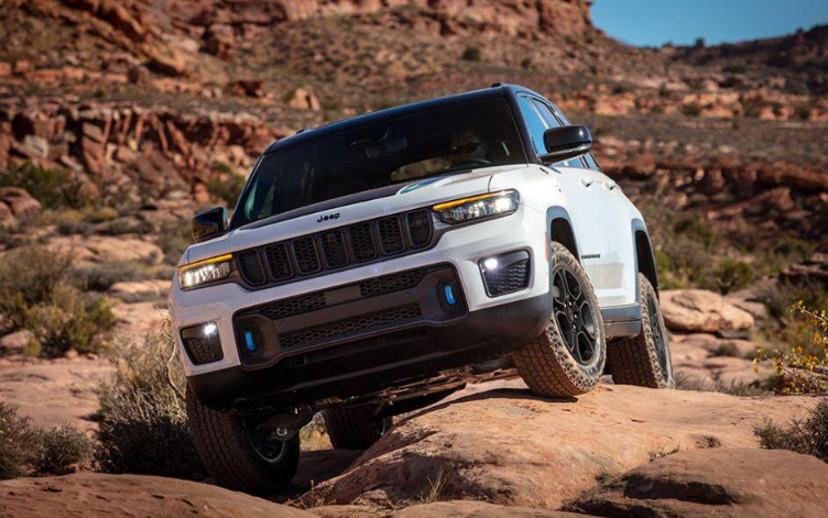
| Jeep Grand Cherokee | 4WD available | Unibody SUV | Lower fuel economy pattern |
If you're mostly on paved Highway 101 with occasional rain, AWD covers you well. If you're taking occasional trips down gravel forest roads for hiking or fishing, AWD still handles most of that, with 4WD as a nice-to-have. If you're regularly towing a boat to a wet launch ramp or driving unmaintained backroads, 4WD starts to earn its keep. Want to compare options side by side? You can explore new AWD and 4WD models to see which lineup fits your routine.
Family Driving and Fuel Economy Trade-Offs
AWD often delivers better fuel economy than 4WD, which matters for families budgeting for gas over years of ownership. EPA-based estimates put the AWD penalty at roughly 1 to 2 mpg compared with a two-wheel-drive version of the same vehicle, and the gap can reach about 3 mpg on heavier 4WD trucks. For a family doing mostly school runs and grocery trips, that adds up over a year of driving. The drivetrain option itself also costs more upfront, typically a few hundred to a couple thousand dollars on a crossover and more on a full-size truck, so it's worth pricing the exact configurations you're comparing.
SUVs vs Trucks: Which Drivetrain Fits Best
Whether you need AWD or 4WD depends heavily on body style and use case. AWD tends to show up on cars and crossovers like the Subaru Crosstrek, Honda Passport, and Hyundai Santa Cruz, all of which prioritize ride comfort and efficiency. 4WD is more common on body-on-frame trucks and SUVs such as the Ford F-150 and Toyota 4Runner, with the unibody Jeep Grand Cherokee as a notable exception that still offers genuine 4WD capability. It comes down to whether daily comfort or off-pavement capability matters more to you.
Beyond Drivetrain: Tires, Ground Clearance, and Owner's Manual Guidance
Drivetrain is only part of the traction equation. Tire condition matters just as much, and so does ground clearance, the distance between the lowest point of your vehicle and the road. A crossover with six or seven inches of clearance handles a graded gravel road fine but can drag on deep ruts or a washed-out edge, which is where a truck or body-on-frame SUV with more clearance has the advantage. On steep, wet grades, both drivetrains help you climb, but getting back down safely comes down to brakes, tires, and speed rather than which wheels are driven.
ODOT rules state that AWD and 4WD vehicles under 6,500 pounds unloaded, not towing, equipped with M+S, all-weather, or traction tires on all wheels, and still carrying chains in the vehicle, are generally exempt from having to use those chains in winter conditions. Vehicles rated 10,000 pounds GVW or less that aren't towing may use traction tires instead of chains in typical winter conditions, though in very bad conditions all vehicles may be required to chain up regardless of drivetrain or tires. Keeping tires in good shape, and scheduling regular maintenance checks, does as much for wet-weather traction as the drivetrain itself.
Your owner's manual is the best source for how your specific system works: when it engages, whether it has a low range, which drive modes are available, and any towing or tire limits the manufacturer sets. Two vehicles both labeled AWD can behave quite differently, so it's worth reading that section before you rely on it in bad weather.
Find Your Ideal AWD or 4WD Vehicle at Lum's Auto Center
We've been a family-owned part of the Oregon and Southwest Washington community since 1969, serving drivers throughout Warrenton, Astoria, Seaside, Long Beach, and Tillamook. We've watched generations of coastal drivers deal with exactly these conditions, and there's no single right answer for everyone.
Talk to Our Team
Some households need the everyday reassurance of AWD. Others need the towing muscle and low-range gearing of 4WD. Our team can walk you through the differences in person and help you land on the setup that actually fits your routine. Stop by, give us a call at 503-861-1144, or browse used AWD and 4WD vehicles online before you visit.
Frequently Asked Questions
Is AWD necessary for Oregon Coast driving? For most daily driving on Highway 101 and around town, AWD provides meaningful traction benefits in rain and fog. Not every driver needs it, but it does help maintain control in the kind of wet conditions that are routine here.
Do I need 4WD if I don't tow or go off-road often? If your driving stays mostly on pavement and light gravel, 4WD is more capability than you'll typically use. It becomes worthwhile once towing, hauling, or genuine backcountry driving enters the picture.
Which is better, AWD or 4WD, for winter weather? AWD tends to work better for everyday winter driving because it engages automatically and doesn't require driver input. 4WD offers more raw capability but is generally better suited to rougher terrain than routine wet-weather commuting.