

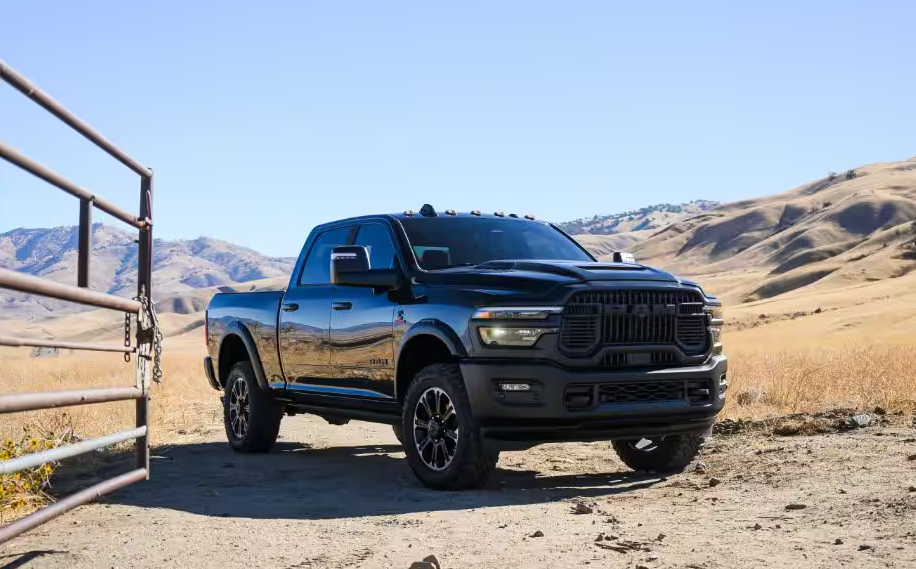
Picking between the Ram 1500 and Ram 2500 sounds straightforward until you’re standing on a dealership lot trying to justify the difference in size and capability. These two trucks share a name and a reputation for toughness, but they serve genuinely different purposes. Whether you’re hauling gear down to the Oregon Coast or managing a full workweek on a jobsite, the right choice comes down to understanding what each truck was actually built to do.
At Lum’s Auto Center, we work through this decision with customers regularly, and we’ve put together this guide to help you sort it out before you visit. If you’re ready to start comparing options now, you can browse our new Ram inventory to see what’s currently available.
How the Ram 1500 and Ram 2500 Actually Differ
It comes down to duty rating. The Ram 1500 is a light-duty truck built for everyday versatility, while the Ram 2500 is a heavy-duty truck designed to handle demanding loads, larger trailers, and rigorous commercial use. That distinction shapes everything from the frame and suspension to engine options and capability figures.
The Ram 1500 leans into comfort, technology, and daily drivability. The Ram 2500 prioritizes raw capability, with a heavier frame, reinforced components, and significantly higher towing and payload ratings. These differences aren’t cosmetic. They reflect fundamentally different engineering priorities aimed at different kinds of truck owners.
Towing and Hauling Capability: Light-Duty vs. Heavy-Duty Performance
Towing and payload are usually the first numbers people check, and for good reason. The gap between these two trucks is substantial enough to matter in real-world use, particularly for anyone managing boats, fifth-wheel campers, or heavy equipment.
| Ram 1500 | Ram 2500 | |
|---|---|---|
| Engine Options | 3.0L Hurricane, 5.7L HEMI V8 | 6.4L HEMI V8, 6.7L Cummins Turbo Diesel |
| Max Towing Capacity | Up to 11,610 lbs (3.0L Hurricane) | Up to 19,990 lbs (6.7L Cummins Turbo Diesel) |
| Payload Capacity | 1,190 to 2,360 lbs | Up to 3,930 lbs (HEMI V8) |
| Positioning | Daily driving, versatility, comfort | Heavy hauling, jobsite durability, max capability |
Ram 1500 Towing and Payload for Everyday Needs
The Ram 1500 handles most of what everyday truck owners actually need. With max towing of up to 11,610 lbs when properly equipped with the 3.0L Hurricane engine, it’s a natural fit for pulling a fishing boat out to Tillamook Bay, hauling a travel trailer on a coastal camping trip, or handling lighter jobsite loads. Its engine lineup balances power with efficiency, and the ride quality holds up well on longer highway stretches.
For families and individuals who need a dependable, capable truck without needing to move mountains, the Ram 1500 covers a lot of ground.
Ram 2500 Towing and Payload for Serious Work
The Ram 2500 steps into a different category entirely. With the available 6.7L Cummins Turbo Diesel, it can tow up to 20,000 lbs when properly configured, and payload tops out at 4,580 lbs with the 6.4L HEMI V8. Its reinforced frame and heavy-duty axles give it stability under loads that would strain a lighter truck.
For contractors working jobsites in Clatsop County, ranchers moving livestock trailers, or anyone routinely hauling equipment, those numbers translate directly into capability you can count on every day.
Daily Driving and Ride Comfort on Oregon Coast Roads
Living and working in the Pacific Northwest means driving roads that are anything but predictable. Highway 101 winds along the coast, and rural gravel lanes outside Warrenton, OR have a way of testing your suspension. Your truck needs to feel manageable day to day, and this is where the differences between the Ram 1500 and Ram 2500 become genuinely relevant.
The Ram 1500 uses a coil-spring rear suspension, which absorbs road imperfections more smoothly and delivers a noticeably more refined ride. That translates to a quieter, more car-like feel on long drives and in everyday town driving. The Ram 2500, by contrast, uses a leaf-spring rear suspension optimized for load-bearing performance. That setup is the right engineering choice when you’re hauling heavy payloads or towing at the upper end of the truck’s rating, but it produces a firmer, choppier feel when the truck is running unloaded.
Drivers who spend most of their time commuting or running errands will feel that difference clearly. The Ram 1500 earns higher marks as a daily driver for exactly this reason.
Jobsite Use, Weekend Recreation, and Real-World Versatility
Both trucks show up differently depending on what you’re asking of them. How you split your time between work and recreation will push you toward one or the other.
Which Truck Handles the Jobsite Better
The Ram 2500 is the clear choice for serious jobsite use. Its payload capacity means you can load the bed with materials without worrying about exceeding limits, and its solid build handles daily wear from construction work. When you’re regularly transporting lumber, machinery, or towing multiple pieces of equipment in a single run, the Ram 2500 justifies its cost quickly. For a contractor running jobsites around Clatsop County and Southwest Washington, it’s the truck built for that kind of schedule.
Exploring the Oregon Coast: Trails, Boats, and Campers
For weekend adventures along the coast, the Ram 1500 offers a compelling mix of capability and approachability. It’s lighter, more maneuverable on narrow forest service roads, and easier on fuel when you’re putting miles between campgrounds.
If your plans involve a moderately sized boat, a pop-up camper, or a utility trailer loaded with ATVs, the Ram 1500 handles all of it without overcomplicating the drive. The Ram 2500 does step up for those towing larger fifth-wheel campers or horse trailers, but its size and weight can feel like more truck than necessary for a casual trip to Cannon Beach.
Cab Configurations, Technology, and Comfort Features
The two trucks offer different cab options. The Ram 1500 comes in Quad Cab and Crew Cab. The Ram 2500 comes in Regular Cab, Crew Cab, and Mega Cab. The Crew Cab remains the most popular choice for families and those who carry passengers regularly, offering generous rear seating in both models.
Technology and interior quality have improved significantly across both lineups. The Ram 1500 tends to lead in premium features, with larger touchscreen displays, available premium audio systems, and driver assistance packages that feel more consumer-focused. The Ram 2500 integrates solid technology as well, but its feature set tilts toward utility, with trailer management systems and connectivity tools that complement jobsite use.
Both trucks are available across multiple trim levels, from the Tradesman up to the Limited, so the right fit depends on how much comfort and technology you want alongside the capability you need.
Cost, Fuel Economy, and Long-Term Ownership Considerations
Budget extends well beyond the purchase price. The Ram 1500 carries a lower starting price and delivers better fuel efficiency, which adds up over time for anyone putting significant miles on their truck. The Ram 2500 costs more upfront and demands more at the pump, and that gap can widen meaningfully over several years of ownership.
The Ram 2500’s added mass also affects tire wear and how the truck handles in everyday settings. Long-term, buyers who genuinely need heavy-duty capability find real value in the Ram 2500’s durability and resale strength. Those who don’t regularly use that capability, though, often find the Ram 1500 a more practical and cost-effective choice over time.
It’s also worth noting that if you’re weighing the Ram 1500 vs Ram 2500 vs Ram 3500, the 3500 pushes into commercial territory with even higher ratings. For most truck buyers along the Oregon Coast and Southwest Washington, the realistic choice comes down to the 1500 and 2500.
Which Ram Truck Is Right for You?
Think honestly about how you’ll use the truck most days, not just the occasional heavy haul or dream camping trip, and the decision usually becomes clearer.
Choose the Ram 1500 If…
The Ram 1500 makes the most sense if your primary needs center on daily driving, light-to-moderate towing, and family use. If your trailer stays under the light-duty threshold and your driving mixes city streets with the occasional jobsite, it delivers everything you need. A family in Warrenton, OR who occasionally tows a camper to the coast and wants a comfortable weekday commuter will likely find the Ram 1500 hits every note without overbuilding for work they won’t do.
Choose the Ram 2500 If…
The Ram 2500 earns its place when your work or recreation regularly pushes the limits of what a light-duty truck can handle. Contractors who move heavy materials, ranchers who tow livestock trailers, and outdoor enthusiasts pulling large fifth-wheel campers all benefit from what the Ram 2500 brings. When your needs consistently demand towing approaching 20,000 lbs, reinforced payload ratings, and a truck that can take a beating day after day, the Ram 2500 is built to deliver.
Explore Ram Trucks at Lum’s Auto Center
At Lum’s Auto Center, we’ve been helping Pacific Northwest drivers find the right truck since 1969. Our Warrenton location carries new and pre-owned Ram trucks, including both the Ram 1500 and Ram 2500, and our team knows these vehicles well enough to walk you through the real-world differences rather than just the spec sheet.
You can start your search online, explore financing options to plan your purchase, or visit us in person to take both trucks for a drive and feel the difference for yourself. For current pricing or specific inventory questions, contact us directly or give us a call at 503-861-1144. We’ll help you figure out exactly which Ram belongs in your driveway.
Connect with us


- July 2026
- June 2026
- August 2023
- July 2023
- June 2023
- May 2023
- April 2023
- March 2023
- February 2023
- January 2023
- December 2022
- November 2022
- October 2022
- September 2022
- August 2022
- July 2022
- June 2022
- May 2022
- April 2022
- March 2022
- February 2022
- January 2022
- December 2021
- November 2021
- October 2021
- September 2021
- August 2021
- July 2021
- June 2021
- May 2021
Archives
- 300
- Chrysler
- Color Options
- Dodge
- Dodge Challenger
- Dodge Charger
- Dodge Hornet
- Electric Vehicles
- Finance
- Hybrid
- Jeep Cherokee
- Jeep Compass
- Jeep Gladiator
- Jeep Grand Cherokee
- Jeep Grand Cherokee L
- Jeep Grand Wagoneer
- Jeep Renegade
- Jeep Wrangler
- Last Call
- Local
- News
- Ram
- Ram 1500
- Ram 1500 TRX
- Ram 2500
- Ram 3500
- Safety
- Service & Parts
- Tips and Tricks
- Toyota
- Toyota 4Runner
- Toyota Avalon
- Toyota bZ4X
- Toyota C-HR
- Toyota Camry
- Toyota Corolla
- Toyota Corolla Cross
- Toyota Crown
- Toyota EV
- Toyota GR Corolla
- Toyota GR Corolla Morizo Edition
- Toyota GR86
- Toyota Grand Highlander
- Toyota Highlander
- Toyota Mirai
- Toyota Prius
- Toyota RAV4
- Toyota Sequoia
- Toyota Sienna
- Toyota Supra
- Toyota Tacoma
- Toyota Tundra
- Toyota Venza
- Uncategorized
- Used Cars
- Vehicle Comparisons
- Wagoneer Series II
- Wagoneer Series III