
Blog / Tips and Tricks

Year-End Car Deals in Warrenton, OR: How to Compare Lum's Auto Center Specials

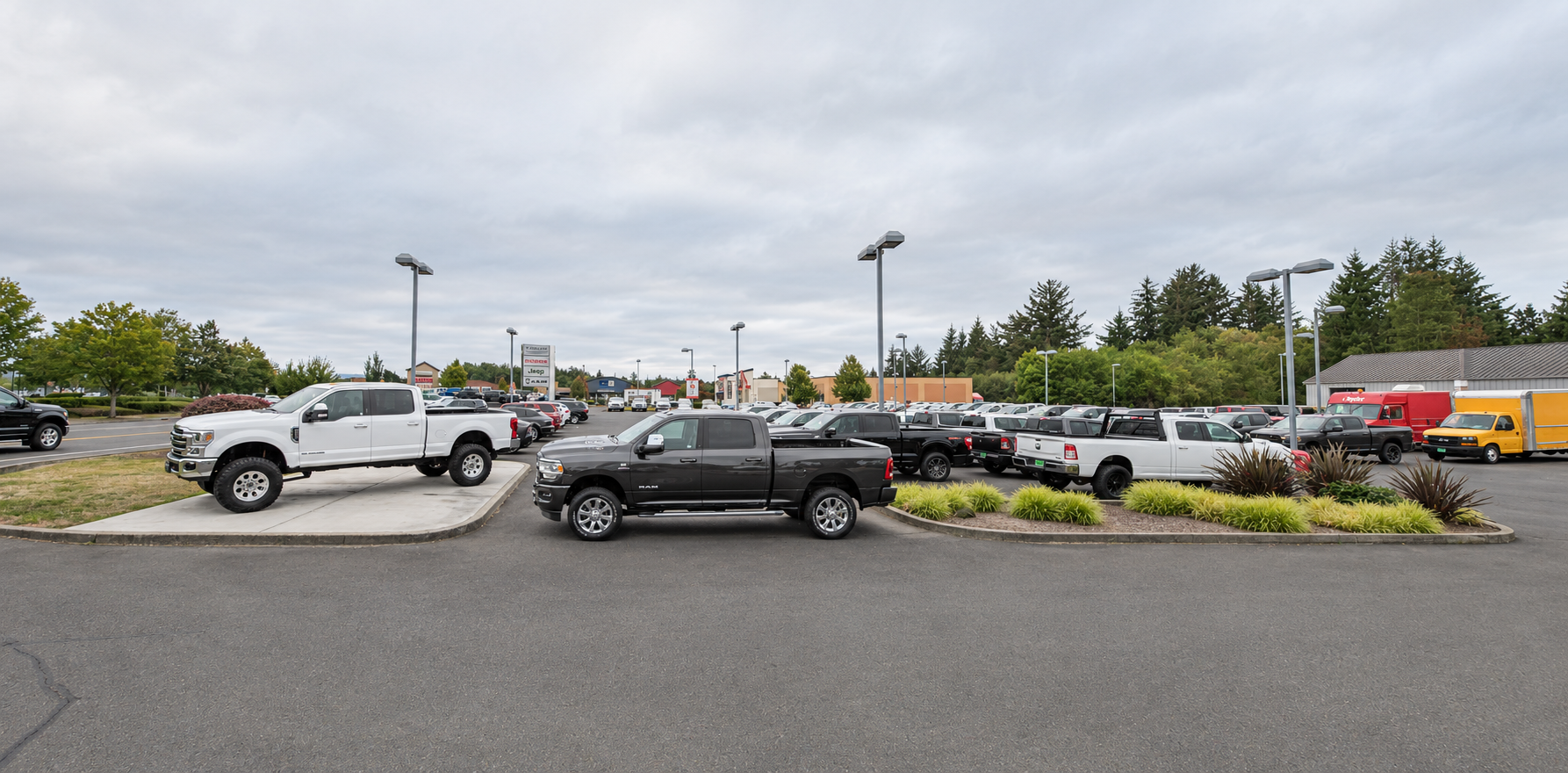
Pickup trucks and vehicles displayed at a dealership

Shopping for year end car deals Warrenton OR drivers can trust starts with one shift in thinking. Stop asking which monthly payment looks lowest and start asking which offer costs you the least overall and fits your life. Lum's Auto Center is a family-owned dealership group that has served the region since 1969, and this guide shows how we suggest you compare offers.

If you'd rather browse as you read, you can view our new inventory or pre-owned inventory any time.

Why Year-End Is a Smart Time to Shop for Car Deals in Warrenton, OR

Year-end is a good time to compare offers side by side. Many of the shoppers we see this time of year have extra time off, plenty of budget questions and a natural reason to reevaluate the vehicle they drive.

Common promotions include discounts, rebates, low-rate financing, cash back, low monthly payments and lease offers. Their terms may involve eligibility restrictions, down payments or fees, and some apply only to selected models, so read every offer as a set of conditions before you react to the headline.

Types of Year-End Offers You'll See at Lum's Auto Center

We have separate pages for new-vehicle specials, lease specials, used-vehicle specials, and new and pre-owned inventory. Our Warrenton dealerships, Lum's Toyota and Lum's CDJR, carry new Toyota, Chrysler, Dodge, Jeep, and Ram vehicles, plus used vehicles from many manufacturers. That mix makes comparing car specials Warrenton OR shoppers ask about much easier.

Lease Specials and Finance Offers

A lease pays for use of a vehicle over an agreed period and mileage. Payments cover expected depreciation, a rent charge, taxes and fees, and they're usually lower than finance payments for the same vehicle. At lease end, the vehicle goes back unless the agreement allows a purchase.

Standard leases commonly cap annual mileage at 15,000 miles or less. Excess mileage can bring fees, and so can wear, damage, or missing equipment. If you commute from Astoria or Seaside, do that mileage math first.

You'll find current lease offers on our lease specials, where we feature deals on new Toyota, Chrysler, Dodge, Jeep and Ram models. If you're looking for car lease specials Warrenton drivers can take advantage of, it's the best place to start, and our team can walk you through the terms of any offer that catches your eye. Finance offers work differently, with terms that depend on the vehicle, your credit profile, down payment and trade-in.

Manufacturer Incentives and Used Vehicle Specials

Manufacturer incentives can include cash rebates or special financing on certain models, and eligibility varies by buyer. On the Oregon Coast, you may see them on Toyota, Chrysler, Dodge, Jeep and Ram models. Manufacturers set these programs, not the dealership.

Our used vehicle specials depend on current inventory, so confirm availability before making a trip. If you're comparing used vehicle specials Warrenton has to offer, a quick call saves you a drive. New listings may show as in stock, in transit, or in production, so ask about current status, pricing, and availability.

How to Compare Year-End Car Specials Step by Step

Year end vehicle deals Oregon shoppers find can look similar on the surface and differ a lot in the details. Put each offer through the same two filters below, then line them up side by side.

Look at Total Vehicle Cost Instead of the Monthly Payment Alone

Use this simple formula to compare offers on equal terms:

Vehicle price + fees + interest − incentives − trade-in value = total cost

A longer loan term can lower the monthly payment but raise the total interest you pay. For loans, compare the amount financed, APR, loan length and monthly payment, and remember that ownership costs also include insurance, registration, maintenance, fuel and repairs.

Ask for the out-the-door price in writing. It's the vehicle's total price before financing, including taxes and fees. Optional add-ons aren't free, so ask for each one's price, and decline any you don't want.

Our payment calculator gives a quick estimate, though it excludes tax, title, license and documentation fees, so use the out-the-door price for your final comparison.

Check Eligibility, Terms, and Availability

For every offer, ask whether it applies to the specific vehicle and to you, whether it requires a particular financing arrangement, and which fees apply. Get the details in writing, and before signing, check that the contract matches those figures.

Copy this checklist for every offer you compare:

  • Term length

  • APR

  • Down payment

  • Due at signing

  • Mileage limits

  • Eligibility requirements

  • Expiration date

  • Stock availability

For leases, also compare the total due under the lease, the mileage allowance and overage charge, and end-of-lease fees. When you're ready to compare real numbers, contact our team and we'll walk through them with you.

New, Used, or Certified: Which Year-End Deal Fits You?

The right choice depends on your budget, how long you plan to keep the vehicle, and the coverage you want. Whether you're searching Warrenton car dealers or weighing car dealerships in Astoria, Oregon, here's how the three options compare.


Option Typical Best Fit Warranty/Coverage Financing/Incentive Options Things to Verify
New Drivers who want a current model and manufacturer programs Manufacturer's new-vehicle warranty Lower finance rates or cash back may apply to certain makes or models Which incentives fit the exact vehicle and your qualifications
Used Shoppers focused on variety and value Buyers Guide states "as is" or with a warranty Terms depend on vehicle, credit profile, down payment and trade-in The Buyers Guide, a vehicle-history report and an independent mechanical inspection
Certified Buyers who want added peace of mind on a pre-owned vehicle Coverage defined by the certification program Pre-owned financing options may be available What the certification covers, plus an independent inspection

A vehicle-history report may show accident or flood damage but typically doesn't list mechanical problems. For used cars in Astoria and nearby, test-drive the vehicle, check its equipment, and ask permission for your own mechanic to inspect it. Get any repair promises in writing. Oregon buyers don't get three days to change their minds, so don't sign until you're ready.

Our pre-owned inventory may include certified pre-owned vehicles when available. Our service center can also add peace of mind after you buy.

Trade-In and Financing Tips for Oregon Coast Drivers

Your trade affects the total cost, and so does your financing, so handle both deliberately. A little homework before you visit makes each easier.

Get a Trade Estimate and Treat It Separately from the Purchase Price

The FTC recommends a two-step approach:

  1. Step 1: Settle the out-the-door price of the vehicle you want.

  2. Step 2: Only after that, talk through what your trade is worth.

With the two apart, each number is easier to judge. If your loan balance exceeds your trade value, the difference is negative equity. A dealer may add it to the new loan or deduct it from a down payment, and rolling it in increases the amount borrowed.

We offer an online trade estimate. An in-person appraisal confirms value based on condition, mileage, and history along with market factors, and we'll appraise your vehicle even if you're not buying. Oregon DMV advises disclosing known problems and telling the lienholder about a lien trade-in. A dealer has 15 days to pay off liens.

Compare Financing Options and Get Pre-Approved

A pre-approval shows your APR, loan length and maximum loan amount before you visit, which gives you a benchmark for the dealer's offer. Compare offers from multiple lenders and the dealer. Credit reports and scores affect the rate, and the CFPB says auto-loan inquiries within a 14-to-45-day window count as one inquiry, so shopping around won't multiply the hit to your credit.

Our finance team works with multiple lending resources. Our online financing application lets you begin and see a prequalification status. Submitting it authorizes a credit investigation and sharing of your application information with lenders.

Questions to Ask and Mistakes to Avoid Before You Sign

These are questions we hear from local drivers:

  • Does this offer apply to this exact vehicle and to me?

  • Does it require a particular financing arrangement?

  • Which fees apply, and what is the out-the-door price?

  • When does the offer end, and is the vehicle in stock?

Mistakes worth avoiding:

  1. Focusing only on the monthly payment. A longer term can lower it while raising total interest.

  2. Mixing the trade and the purchase. Agree on the vehicle's price before you talk about the trade.

  3. Skipping the fine print. Eligibility, down payment, and model limits can change what you actually get.

  4. Accepting add-ons by default. They aren't free, and you can decline them.

  5. Not checking the contract. Confirm it matches your written figures before signing.

  6. Assuming a vehicle is available. Inventory is subject to prior sale, so confirm first.

Your Year-End Shopping Checklist for the Oregon Coast

Before you visit, run through this quick recap. The first half helps you choose the right vehicle for coastal driving, and the second makes sure you're comparing deals on equal terms.

Match the Vehicle to Your Coastal Driving

  • Weather and roads: Decide whether AWD matters for the wet or slick roads you drive most, and ask about tires and features suited to rainy conditions.

  • Salt air: Factor in how often you'll wash the vehicle, especially the underbody, if you live or park near the water.

  • Commute distance: If you're leasing, compare the mileage limit with your daily drive between Warrenton, Astoria, Seaside or beyond.

Compare Every Deal the Same Way

  • Out-the-door price: Request it in writing for every vehicle you're considering.

  • Offer terms: Use the offer checklist above for each one, from APR and term length to eligibility and expiration date.

  • Trade-in: Get an estimate, but settle the vehicle's price before discussing your trade.

  • Financing: Get pre-approved and compare at least one outside lender with the dealer's offer.

View Current Lum's Specials and Get Offer Details Today

If you're comparing year end car deals Warrenton OR has this season, start with our lease and used specials, then reach out through our contact form for details on a specific vehicle. Whether you know us as Lum's Warrenton or lums dealership, we're a local, family-owned team that has been here since 1969.

Because every offer depends on the vehicle, your eligibility, the lender and the program, the fastest way to get accurate numbers is to talk with our team. Call us at 503-861-1144. We're open Monday through Saturday from 9 a.m. to 6 p.m. and Sunday from 8 a.m. to 8 p.m.

FAQs About Year-End Car Deals in Warrenton, OR

When do year-end deals start? There's no fixed date. Offers vary by manufacturer and program, so check our specials pages or contact us for what's current.

Should I focus on the payment or the total cost? Total cost. A lower payment can come from a longer term, which may raise total interest.

How does a trade-in affect an offer? Settle the out-the-door price first, then discuss trade value. Negative equity, if any, can increase the amount you borrow.

Does pre-approval affect negotiation? It gives you a benchmark APR, loan length, and maximum amount to compare against the dealer's offer.

Is leasing or financing better? It depends on your mileage, how long you keep vehicles, and your budget. Lease payments are usually lower, but you return the vehicle unless the agreement allows a purchase.

Do all incentives apply to every buyer? No. Eligibility may depend on the vehicle, your qualifications, and the lender, so ask for details in writing.
Posted in:

Related Posts

Jeep Grand Cherokee driving off-road over rocky desert trail

AWD vs 4WD for Oregon Coast Rain: Which Setup Do You Need?

Astoria averages 70.26 inches of rain a year, with November (11.05 inches) and December (10.68 inches) delivering the heaviest downpours while July stays dry at just 0.83 inches. Rain around here is the main event, not something happening in the background. If you're shopping for a vehicle to handle Highway 101 fog, wet gravel pullouts, or a boat ramp in Ocean Park, the AWD vs 4WD Oregon Coast question deserves a real answer. We put together this guide to help you sort through it, and if you want to see your options in person, you can always browse used AWD and 4WD vehicles at our Warrenton location. Why Oregon Coast Driving Demands the Right Drivetrain Between the near-constant drizzle, coastal fog rolling off the water, and the gravel spur roads connecting neighborhoods to the highway, this region asks more of a vehicle than most. For most daily driving, all-wheel drive makes a real difference in how confidently a car handles wet pavement. The right answer depends on where you actually drive, not where you might drive someday. AWD vs 4WD: How Each System Works AWD and 4WD both send power to all four wheels, but the mechanics and the driving experience differ enough that picking the wrong one for your lifestyle can mean paying for capability you'll never use, or not having the traction you actually need. All-Wheel Drive: Automatic Everyday Traction AWD uses a combination of front, rear, and center differentials to automatically send power to whichever wheels have the most grip, without any input from the driver. That convenience comes with some added weight and cost, along with a modest fuel economy impact. For Highway 101 commuters dealing with sudden rain squalls, that automatic response is what makes AWD reassuring. You don't have to think about it. It just adjusts. Four-Wheel Drive: Driver-Engaged, Heavy-Duty Traction 4WD takes a different approach, pairing two differentials with a transfer case, often including a driver-selectable high and low range. That extra hardware makes 4WD sturdier and better suited for rugged terrain, but it also means you're the one flipping a switch or lever to engage it. The advantages of 4-wheel drive really show up when you're crawling over rutted forest roads or need low-range gearing to pull through deep mud, not during a routine grocery run. Daily Rain Confidence in Warrenton, Astoria, and Seaside For the everyday stop-and-go of life in Warrenton, Astoria, and Seaside, AWD covers nearly every scenario you'll face. It works automatically in rain, sleet, or snow without requiring the driver to do anything special, essentially running in the background the whole time. If you're wondering whether you need AWD for a daily commute through coastal fog and wet intersections, the answer leans yes far more often than it leans toward 4WD. AWD helps maintain traction, but it won't eliminate the risks of wet or foggy driving. Slowing down, leaving extra following distance, and paying attention to reduced visibility on Highway 101 still matter, regardless of what's under the hood. Gravel Roads, Hills, and Light Trail Access Plenty of coastal side roads turn to loose gravel once you leave the highway. The gravel spurs and beach access roads around Warrenton and Fort Stevens State Park are a good example of the mixed surfaces you hit close to town. AWD handles moderate, well-maintained gravel surfaces like these without much trouble. For light trails and graded gravel, AWD works fine. For rougher routes with ruts, mud, or steep loose climbs, 4WD's low-range gearing gives you more margin, provided you're on a road or trail that's actually open to your vehicle. Beaches, dunes, and forest trails all have their own rules about what's allowed and when. If you're heading into Clatsop or Tillamook State Forest, keep in mind that most trails and dispersed sites stay open year-round, while developed campgrounds generally operate from mid-May through early October. Fire danger changes access: at High danger, OHV use is allowed only before 1 p.m. and after 8 p.m., and at Extreme danger, off-road vehicle use is restricted or prohibited. Forest roads are working roads shared with log trucks, and ODF recommends driving under 25 mph and staying right. Check ODF's road report and fire restrictions map before heading out rather than assuming a route is open. Towing, Hauling, and Truck Considerations 4WD earns its reputation when the load gets heavy. It often provides better towing and traction capability, though it costs more at the pump. If you're backing a boat trailer down a wet launch ramp in Ocean Park or Tillamook, that extra traction matters. Both AWD and 4WD can help pull boats up slippery wet ramps, a scenario a lot of coastal drivers deal with regularly. For heavier loads and slick ramps, 4WD is the safer bet. Matching Drivetrain to Your Lifestyle For daily driving, commuting, and light gravel, AWD usually gets the job done for most Oregon Coast households. Whether 4WD is worth it depends on how often you're towing, hauling, or heading onto rougher terrain. Common AWD and 4WD vehicles tend to stack up like this: Vehicle Drivetrain Typical Body Style General Fuel Economy Pattern Subaru Crosstrek AWD standard Crossover Better fuel economy pattern Honda Passport AWD Crossover SUV Better fuel economy pattern Hyundai Santa Cruz AWD available Crossover truck Better fuel economy pattern Ford F-150 4WD available Full-size truck Lower fuel economy pattern Toyota 4Runner 4WD available Body-on-frame SUV Lower fuel economy pattern Jeep Grand Cherokee 4WD available Unibody SUV Lower fuel economy pattern If you're mostly on paved Highway 101 with occasional rain, AWD covers you well. If you're taking occasional trips down gravel forest roads for hiking or fishing, AWD still handles most of that, with 4WD as a nice-to-have. If you're regularly towing a boat to a wet launch ramp or driving unmaintained backroads, 4WD starts to earn its keep. Want to compare options side by side? You can explore new AWD and 4WD models to see which lineup fits your routine. Family Driving and Fuel Economy Trade-Offs AWD often delivers better fuel economy than 4WD, which matters for families budgeting for gas over years of ownership. EPA-based estimates put the AWD penalty at roughly 1 to 2 mpg compared with a two-wheel-drive version of the same vehicle, and the gap can reach about 3 mpg on heavier 4WD trucks. For a family doing mostly school runs and grocery trips, that adds up over a year of driving. The drivetrain option itself also costs more upfront, typically a few hundred to a couple thousand dollars on a crossover and more on a full-size truck, so it's worth pricing the exact configurations you're comparing. SUVs vs Trucks: Which Drivetrain Fits Best Whether you need AWD or 4WD depends heavily on body style and use case. AWD tends to show up on cars and crossovers like the Subaru Crosstrek, Honda Passport, and Hyundai Santa Cruz, all of which prioritize ride comfort and efficiency. 4WD is more common on body-on-frame trucks and SUVs such as the Ford F-150 and Toyota 4Runner, with the unibody Jeep Grand Cherokee as a notable exception that still offers genuine 4WD capability. It comes down to whether daily comfort or off-pavement capability matters more to you. Beyond Drivetrain: Tires, Ground Clearance, and Owner's Manual Guidance Drivetrain is only part of the traction equation. Tire condition matters just as much, and so does ground clearance, the distance between the lowest point of your vehicle and the road. A crossover with six or seven inches of clearance handles a graded gravel road fine but can drag on deep ruts or a washed-out edge, which is where a truck or body-on-frame SUV with more clearance has the advantage. On steep, wet grades, both drivetrains help you climb, but getting back down safely comes down to brakes, tires, and speed rather than which wheels are driven. ODOT rules state that AWD and 4WD vehicles under 6,500 pounds unloaded, not towing, equipped with M+S, all-weather, or traction tires on all wheels, and still carrying chains in the vehicle, are generally exempt from having to use those chains in winter conditions. Vehicles rated 10,000 pounds GVW or less that aren't towing may use traction tires instead of chains in typical winter conditions, though in very bad conditions all vehicles may be required to chain up regardless of drivetrain or tires. Keeping tires in good shape, and scheduling regular maintenance checks, does as much for wet-weather traction as the drivetrain itself. Your owner's manual is the best source for how your specific system works: when it engages, whether it has a low range, which drive modes are available, and any towing or tire limits the manufacturer sets. Two vehicles both labeled AWD can behave quite differently, so it's worth reading that section before you rely on it in bad weather. Find Your Ideal AWD or 4WD Vehicle at Lum's Auto Center We've been a family-owned part of the Oregon and Southwest Washington community since 1969, serving drivers throughout Warrenton, Astoria, Seaside, Long Beach, and Tillamook. We've watched generations of coastal drivers deal with exactly these conditions, and there's no single right answer for everyone. Talk to Our Team Some households need the everyday reassurance of AWD. Others need the towing muscle and low-range gearing of 4WD. Our team can walk you through the differences in person and help you land on the setup that actually fits your routine. Stop by, give us a call at 503-861-1144, or browse used AWD and 4WD vehicles online before you visit. Frequently Asked Questions Is AWD necessary for Oregon Coast driving? For most daily driving on Highway 101 and around town, AWD provides meaningful traction benefits in rain and fog. Not every driver needs it, but it does help maintain control in the kind of wet conditions that are routine here. Do I need 4WD if I don't tow or go off-road often? If your driving stays mostly on pavement and light gravel, 4WD is more capability than you'll typically use. It becomes worthwhile once towing, hauling, or genuine backcountry driving enters the picture. Which is better, AWD or 4WD, for winter weather? AWD tends to work better for everyday winter driving because it engages automatically and doesn't require driver input. 4WD offers more raw capability but is generally better suited to rougher terrain than routine wet-weather commuting.

Dealership representative handing car keys to customer

Certified Pre-Owned vs Used Cars: Which Option Makes Sense at Lum's?

A pre-owned vehicle can offer strong value, but not every pre-owned vehicle is sold under the same standards. Two of the most common categories are certified pre-owned vehicles and conventional used vehicles. Both can be smart choices; the better fit depends on your budget, preferred age and mileage, warranty priorities, and how much flexibility you want. At Lum's Auto Center in Warrenton, OR, shoppers can compare a changing selection of used and certified pre-owned vehicles when available. Understanding the distinction will help you ask the right questions before scheduling a test drive. What Is a Certified Pre-Owned Vehicle? A certified pre-owned, or CPO, vehicle is a used vehicle that has met the eligibility and inspection requirements of a manufacturer-backed certification program. Requirements vary by brand, but they commonly address model year, mileage, vehicle history, mechanical condition, and reconditioning. A qualifying vehicle must complete the program's inspection process before it can be advertised as certified. CPO vehicles often include limited warranty coverage and may include additional benefits such as roadside assistance, scheduled maintenance, or special financing. Exact coverage depends on the manufacturer, model, original in-service date, and certification program, so shoppers should review the written program details for the specific vehicle. What Is a Conventional Used Vehicle? A conventional used vehicle has had a previous owner but is not currently being sold under a manufacturer-backed CPO program. It may be older, have higher mileage, come from a brand the dealership does not represent, or simply fall outside a certification program's eligibility limits. That does not automatically make it a poor choice. Many used vehicles can provide dependable transportation and better fit a lower or more flexible budget. Used vehicles at Lum's are reviewed before being offered for sale, and individual listings provide vehicle-specific details. Shoppers should still evaluate history, condition, remaining warranty coverage, and service records for any vehicle they are considering. Certified Pre-Owned vs Used Cars at a Glance Comparison Point Certified Pre-Owned Conventional Used Eligibility Must meet a brand program's age, mileage, history, and condition standards Can include a much wider range of years, mileage, makes, and conditions Inspection Must complete the manufacturer's required certification inspection Inspection and reconditioning standards are set by the selling dealership Warranty Usually includes manufacturer-backed limited warranty coverage May have remaining factory coverage, dealer coverage, optional protection, or no warranty Price Often priced higher than a similar non-certified vehicle Usually offers a broader range of price points Selection Limited to vehicles that qualify for a specific certification program Typically provides more makes, model years, mileage ranges, and body styles Best Fit Shoppers prioritizing newer vehicles and added program coverage Shoppers prioritizing budget, variety, or a specific older model Reasons to Consider a Certified Pre-Owned Vehicle Added Standards and Manufacturer-Backed Coverage The main appeal of a CPO vehicle is the structured program behind it. Buyers receive documentation showing that the vehicle met defined eligibility criteria and passed the required inspection. The included limited warranty may also reduce uncertainty about certain covered repairs during the applicable term. A Newer-Vehicle Experience at a Pre-Owned Price CPO inventory commonly consists of recent-model vehicles with mileage below the program limit. This can appeal to shoppers who want modern safety, convenience, connectivity, or driver-assistance features without paying the price of a comparable new vehicle. Potential Program Benefits Depending on the manufacturer, certification may include roadside assistance, trip interruption coverage, vehicle history documentation, exchange provisions, maintenance benefits, or access to special financing. These benefits are not identical across brands and may change, so verify the details rather than assuming every CPO vehicle includes the same package. Reasons to Consider a Conventional Used Vehicle More Flexibility Across Price and Vehicle Type Conventional used inventory usually covers a wider range of budgets, model years, mileage levels, and manufacturers. That flexibility can be especially useful for first-time buyers, commuters, shoppers seeking a second household vehicle, or drivers who want a discontinued model or configuration. Lower Purchase Price May Matter More Than Certification A non-certified used vehicle may cost less than a comparable CPO model because it does not include the certification program and related coverage. For shoppers who have room in the budget for routine maintenance, plan to keep monthly payments lower, or prefer to arrange separate protection, the price difference may be more valuable than CPO benefits. Questions to Ask Before Choosing Either Option Is this vehicle manufacturer-certified, dealer-certified, or simply described as inspected? What specific inspection was completed, and can I review the checklist? What warranty coverage remains, who backs it, and what are the time and mileage limits? Is there a deductible, and which repairs or components are excluded? Can I review the vehicle history report and available maintenance records? What reconditioning work was completed before the vehicle was listed? How does the total price compare with a similar CPO, conventional used, and new vehicle? The word “certified” can be used in different ways. A manufacturer-certified vehicle is enrolled in the automaker's official program. A dealer-certified vehicle may follow standards created by the dealership or a third party. Ask for written documentation so you know which type of certification applies. How to Decide Which Pre-Owned Vehicle Fits You A CPO vehicle may make sense when you want a newer model, prefer manufacturer-backed limited warranty coverage, and are comfortable paying more for those program benefits. A conventional used vehicle may make more sense when the purchase price is the top priority, you want the broadest possible selection, or the exact model you need does not qualify for certification. Do not compare labels alone. Compare the specific vehicles. A well-maintained conventional used vehicle with complete records may suit you better than a CPO vehicle that stretches your budget. Conversely, the warranty and program benefits on a qualifying CPO model may justify the added cost for a buyer who values predictable ownership support. Shop Used and Certified Pre-Owned Vehicles at Lum's Start by browsing the current used vehicle inventory at Lum's Auto Center. Inventory changes regularly, and certified availability varies by brand and vehicle. Open individual listings to review mileage, equipment, photos, and current availability, then contact our team to confirm whether a particular model is manufacturer-certified and what coverage applies. You can also begin the financing process online or use our vehicle search resources if you do not see the exact model you want. Our team can help you compare total cost, warranty details, trade-in value, and ownership priorities without treating one category as the right answer for every buyer. Frequently Asked Questions About CPO and Used Cars Are all low-mileage used cars certified pre-owned? No. Low mileage alone does not make a vehicle certified. It must meet the manufacturer's full eligibility requirements and complete the required certification process. Do certified pre-owned vehicles cost more? They often cost more than comparable non-certified vehicles because of the program requirements, inspection, reconditioning, warranty coverage, and possible added benefits. Actual pricing depends on the vehicle and market conditions. Can a used vehicle still have factory warranty coverage? Yes. A conventional used vehicle may still have part of its original factory warranty remaining, depending on its age, mileage, in-service date, and warranty terms. Ask the dealership to verify the applicable coverage. Compare Your Options at Lum's Auto Center in Warrenton The best choice is the vehicle that fits your budget, driving needs, and comfort level after you review the full details. Visit Lum's Auto Center at 1605 SE Ensign Lane in Warrenton, OR, call 503-861-1144, or contact us online to compare available certified pre-owned and used vehicles. Image by Getty Images under the Unsplash+ License

Dealership representative handing car keys to customer

Used Cars for Sale in Warrenton, OR: How to Shop Lum's Auto Center Inventory

Shopping for a used car can feel overwhelming, but the experience changes significantly when you work with a dealership that genuinely knows its community. Lum's Auto Center has been serving Pacific Northwest drivers since 1969. For anyone searching for used cars for sale in Warrenton, OR, we've built a reputation that's held up for over 55 years. If you're after a fuel-efficient commuter sedan, a capable truck for coastal work, or a roomy SUV for family road trips, browse our used inventory to see what's currently available. Why Warrenton Drivers Shop for Used Cars at Lum's Auto Center There's a reason shoppers keep coming back to us rather than driving hours to a big-city lot. Our approach is grounded in honesty and customer satisfaction, a standard we've maintained for over five decades. A Family-Owned Dealership Built for the Local Community We're family-owned, and that shapes everything about how we operate. When you walk in, you're working with people who have long-standing ties to Warrenton and who understand what drivers across Clatsop County and the Oregon Coast actually need. We also support local charities and community events, which builds the kind of trust no advertising campaign can manufacture. Customers who've bought from us once tend to return because they feel like people worth knowing, not just a completed sale. What Sets Our Used Car Inventory Apart Every vehicle goes through a thorough inspection before it reaches our lot. Inventory updates reflect current market trends and buyer preferences, so if you need a budget-friendly compact or a higher-end pre-owned SUV, there's always something worth considering. We also carry certified pre-owned options and vehicles at a range of price points to broaden access for buyers in different situations. Explore the Used Vehicle Categories at Lum's Auto Center Our pre-owned inventory is intentionally broad because the drivers who shop with us have genuinely different needs. Some are commuting daily into Astoria, others need room for the whole family, and plenty want something capable enough to handle rough Oregon backroads on weekends. Cars, Trucks, and SUVs to Fit Every Lifestyle Here's a quick look at the categories we regularly stock and who they tend to serve best: Category Best For Typical Passenger Capacity Cargo Space Fuel Efficiency Range Common Use Cases Sedan Commuters, first-time buyers 4–5 Moderate trunk Higher MPG Daily driving, city use SUV Families, all-weather drivers 5–7+ Large, flexible Moderate MPG Coast trips, hauling gear Pickup Truck Work, towing, hauling 3–6 Open bed + cab storage Lower MPG Job sites, towing, outdoor recreation Minivan Larger families 7–8 Very large, configurable Moderate MPG Family transport, road trips We carry vehicles from Toyota, Chevrolet, GMC, Jeep, Ram, Dodge, and Chrysler, giving shoppers genuine variety across makes and price ranges. Trucks occupy a strong niche in this region. Warrenton's coastal economy and the broader Pacific Northwest lifestyle mean plenty of drivers need real towing and hauling capability, and our used truck inventory reflects that reality. How Inventory Is Refreshed and What to Expect Used inventory moves quickly, and new arrivals come in regularly. If you didn't find exactly what you wanted during an earlier visit, it's worth checking back. You can search our pre-owned vehicles online anytime, or call us at 503-861-1144 to ask about current availability. How to Search Lum's Used Car Inventory Online Most buyers do their research before setting foot on a lot, and our website is designed to support exactly that. The online inventory tool lets you filter by price range, vehicle type, mileage, and year, so you can surface only the vehicles that realistically fit your criteria. Listings include key details, photos, and pricing to help you build a short list before your visit. Evaluating a Used Car Before You Commit Finding a vehicle that matches your needs is only half the process. The other half involves making sure you're confident in what you're actually buying. Vehicle History, Condition, and the Right Questions to Ask A vehicle history report is one of the most important documents in any used car transaction. It can reveal prior accidents, title issues, number of previous owners, and whether scheduled maintenance was kept up. Ask for it upfront. Any credible dealership should provide it without hesitation. When you visit us to look at a vehicle in person, check the exterior for uneven panel gaps or paint inconsistencies that might suggest prior body work. Look at the interior for wear consistent with the listed mileage. Questions worth raising with our team include: Has this vehicle been in any accidents? What does the service record look like? Has it been through a reconditioning process? Was a full inspection completed before it hit the lot? During the test drive, pay attention to how the vehicle accelerates and brakes, whether the steering feels responsive, and whether any warning lights appear. Unusual sounds during acceleration or braking are worth flagging on the spot. Our certified technicians handle everything from routine maintenance to engine diagnostics, so our service team can also speak to the condition of a vehicle you're considering. Used Car Financing Options at Lum's Auto Center Buying a used car doesn't require a perfect credit score or a large down payment. We work with multiple lenders and offer financing options designed to accommodate a range of financial situations. That includes first-time buyers and people who are rebuilding their credit after a rough patch. Online pre-approval is available through our site so you can get a sense of where you stand before arriving. We also offer a trade-in valuation tool on our main site if you're planning to apply an existing vehicle toward your purchase. Our team will walk you through your options without pressure and help you land on terms that fit your life. Visit Lum's Auto Center in Warrenton, OR If you've been searching for used cars for sale in Warrenton, OR, we offer something genuinely hard to find elsewhere: broad, regularly updated inventory backed by people who know this community and have earned its trust for more than 55 years. Address: 1605 SE Ensign Lane, Warrenton, OR 97146 Sales Hours: Monday–Friday: 8 AM–7 PM Saturday: 9 AM–6 PM Sunday: 11 AM–6 PM Stop by in person, explore the lot, or visit our main site to get started. You're also welcome to reach out through our contact page or call us at 503-861-1144. The right vehicle is likely already on the lot.